Skip to content

Posts tagged ‘Garry Winogrand’

# 6 SIEGFRIED HANSEN, Hamburg Street Photographer

Leica Liker is honored to have Siegfried Hansen, a Hamburg Street Photographer as our #6 guest.

Syn·chro·nic·i·ty
“an apparently meaningful coincidence in time of two or more similar or identical events that are casually unrelated” (dictionary.com)

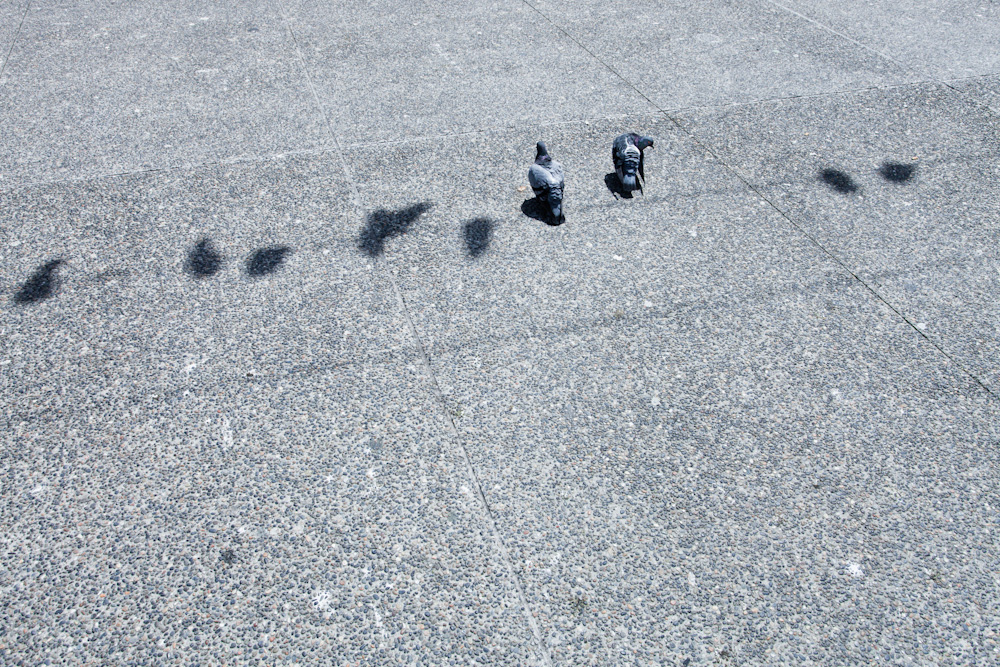
When I came across Siegfried’s work in Flickr, the first thought that came to my mind was the word “synchronicity”. It’s a word that Swiss psychologist Carl Jung coined to describe what he called “temporally coincident occurrences of acausal events.” (Wikipedia) I love to page through his images to vicariously experience these serendipitous moments.

Capturing synchronicity is really difficult. It requires an acute awareness of the environment. But to capture it more than once comes only with a lot of experience. After 10 years of shooting, Siegfried has trained himself such that it’s wired into his psyche. Combine this and his art influences and you see what Siegfried sees. He even has a term for the resulting images: “expected coincidence”.

So much of street photography is about the individual (sometimes forgotten) experience within a community or environment. Perhaps, even the shared moment in a party or a gathering. But many of Siegfried’s photographs celebrate our connection to someone else or thing, like a grain of sand touching another grain of sand on a beach. Which in turn exists on our planet floating in a vast universe. He often reminds us of being a part of something greater in our most mundane moments.

I know Siegfried doesn’t think about these things when he’s shooting and he chuckles when people read deep into his photos. He’s even skeptical. Maybe it’s because of his upbringing in the small country town of Meldorf in northern Germany. But he presents a piece of art. And good art provokes and asks questions.

Here’s my interview with SIEGFRIED HANSEN.

Nick Name: Siggi
Currently living in: Hamburg, Germany
Motto: I am always curious, what will happen around the next corner.
Profession/Job: I have a regular job but it has nothing to do with my photographic life.

Street Photographer since: 2002.
Website: www.siegfried-hansen.de
Organizations or Groups: Seconds 2 Real, Street Photographers, and Public-life


Favorite Street Camera & Lens: Digital: At the moment a Fuji X100; Film: Leica CL with Leitz Wetzlar Summicron 1:2/40mm Lens
Favorite Back up camera: I don’t have one but if my main camera breaks, I’ll buy a new one.
Favorite photography gadget: None
Favorite street food: When I stop for a break, I like to drink a cappuccino.


Do you listen to music while shooting? Never
Favorite music when shooting and/or editing Photos: I like to edit in the quiet of my space.
Favorite photo software: Photoshop Elements 2
3 Favorite Master Photographers: Ernst Haas, Saul Leiter and Ray K. Metzker
3 Favorite Contemporary Photographers: Alex Webb, Jesse Marlow, Trent Parke
Which 3 photographers’ prints do you own? I don’t own any prints. I prefer books.

Color or Black and White? Both
Shoot Film or Digital? I shoot mainly digital because I can process immediately. I do shoot film occasionally but there is too much effort to get the film processed. I have 40 film rolls, which I shot with my Leica CL and I have yet to develop them. I understand why Garry Winogrand had thousands of rolls of film unprocessed. The process is more interesting.

Is there a special time of the day you like to shoot or is any time good? If you live in Hamburg, any time and place is fine. I’ll go outside in any weather. But, I love snow because verything looks new especially when sunlight breaks through the clouds. Red looks like deep red in snow. If I had to choose, I mostly like the sun because of the dark shadows. Light is like a switch. It adds another layer like shadows.

Why did you choose Street Photography and not another form of photography or stamp collecting? It was a lucky circumstance that I found my way to “street photography”. About 10 years ago, I was a “typical” snap shot photographer. I use to shoot a lot of sunsets with my Minolta X300 in both black and white and color. But I wasn’t really engaged in photography. Then I visited an exhibition of André Kertész and his pictures completely changed my way of looking at my environment. Since that day in 2002, wherever I go, I carry my camera with me so I can catch all the moments I see and like.
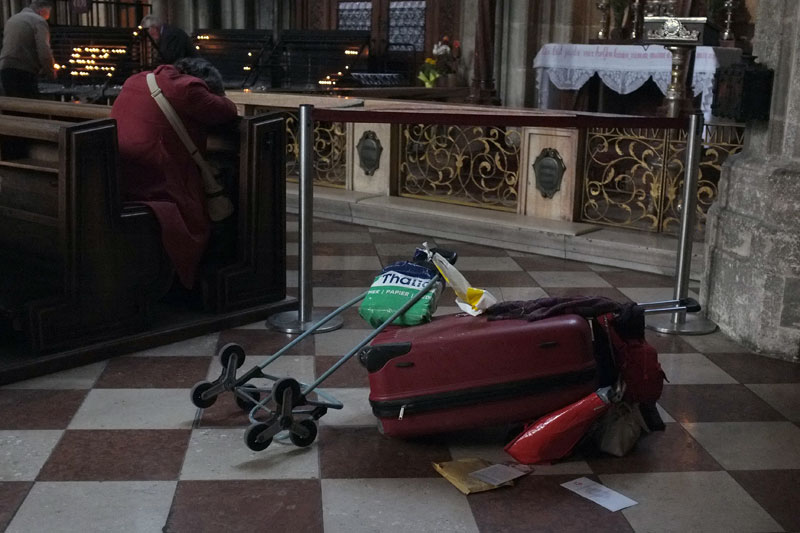
What motivates you to photograph the streets? The unbelievable great variety of possibilities and the idea, that any given moment, something unusual can happen.
Is Street Photography an obsession? Yes, I am guilty, it is an obsession. 🙂
Are you a lone shooter or do you like shooting with friends or a group? Alone.
Favorite street photography city: I live in Hamburg and it is the city where I take most of my photographs. But I also travel often to London, Paris and other cities as well to get new inspirations.
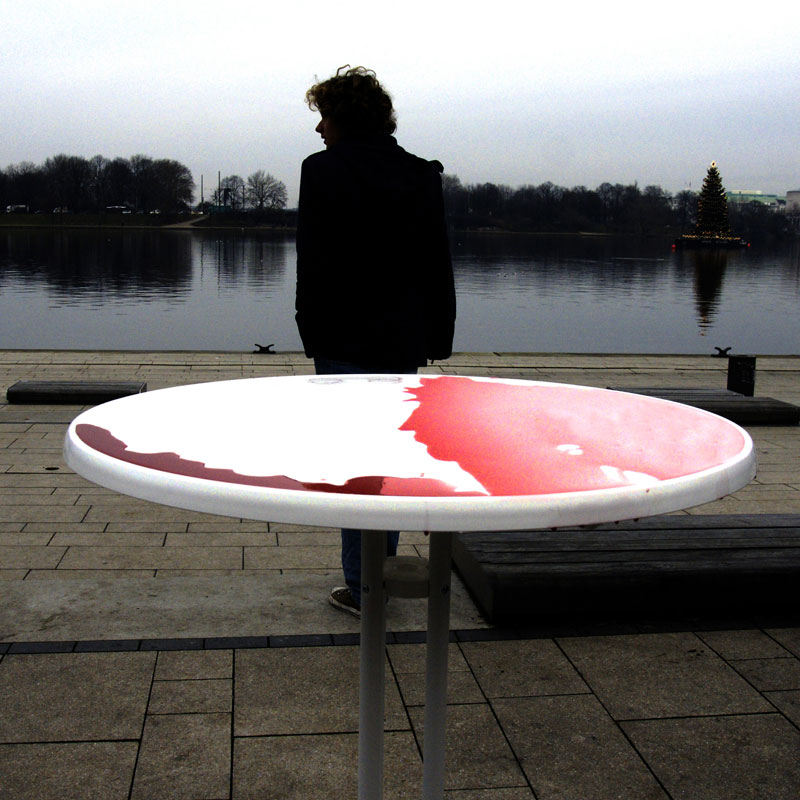
What inspires your photography? I love painters like Lyonel Feininger and Egon Schiele, two major figurative painters in German Expressionism of the twentieth century. I like the abstract ideas that Feininger presents in his paintings and the amazing colors and views of people of Schiele’s work. I also love the “Bauhaus” style, especially Maholy Nagy’s work. Feininger was also part of the Bauhaus movement.
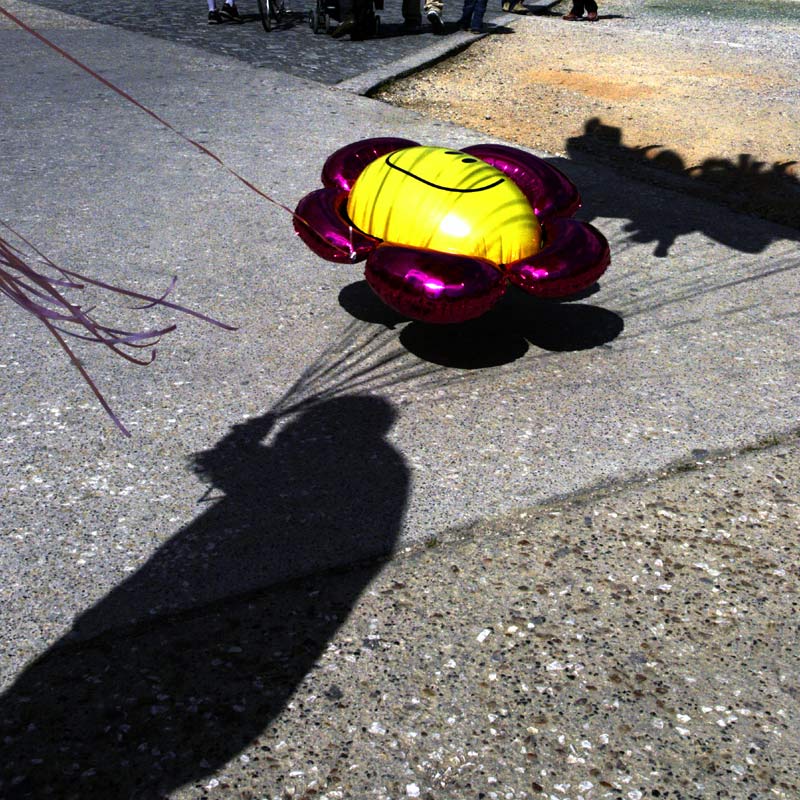

Is there a philosophy or aesthetic behind your compositions that you apply to your photos? I don’t consciously apply any philosophy to my photographs when I go out shooting. But in the back of my mind I’m sure I am influenced by what inspires me. For instance the Bauhaus philosophy of experimenting with new views of ordinary things that have clear structures. If you were to find an equivalent design today, then you can look at Apple or Braun products. When you inspect them, they have a clear concept and design structure. The clarity of their concept is their brand. One thing is for sure, I try to transform our 3D environment into 2D via layering.

What do you look for in a good photograph by others? This is hard to explain. Input, which in general inspires, but also helps me to further develop my work and ideas. I try to be open-minded. I often visit exhibitions and look into many good photographers’ portfolios. Sometimes I see small things in a photo that inspires me to try a new angle or view something in a different way.
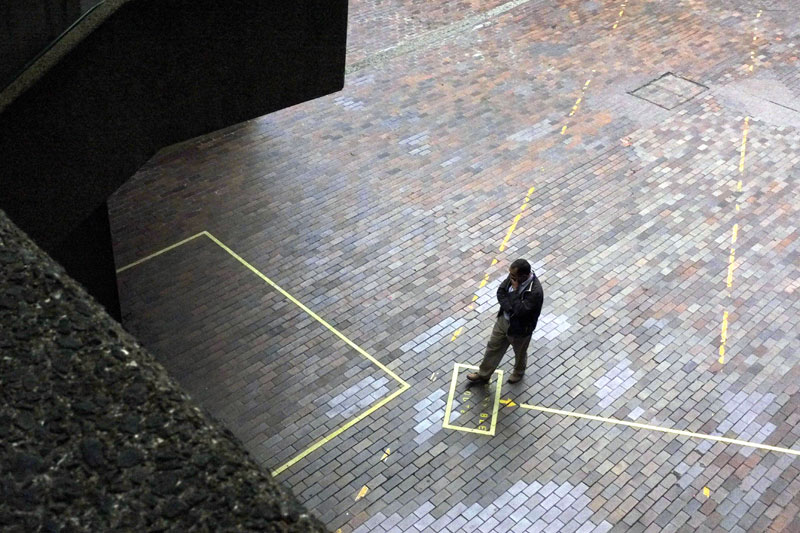

How do you go about shooting a street photograph?
When I go out to shoot, I don’t think about anything. I just go with the flow. Your mind needs to be free. I simply see what looks right to me and not think too much about it. So when I make a photo I just shoot it, then move on. I don’t stand around to analyze the scene or shoot from different angles. I usually have a feeling, I know it’s nice and I shoot it. I may capture a second one but then that’s it. I leave the analyzing until I go home and see if the shot worked.

Over the years, I learned to recognize the special moment or lines and space around me. I also learned to act immediately using available lines or graphic I see as the foreground and background. Then I wait for the situation to reveal itself. I call it “the expected coincidence.” Most of the time nothing happens, but you have to be patient and impassioned. So I often walk the same routes in my hometown, Hamburg, Germany. After 10 years I still see something new every time. Mostly small things, but the small things are often the difficult things.
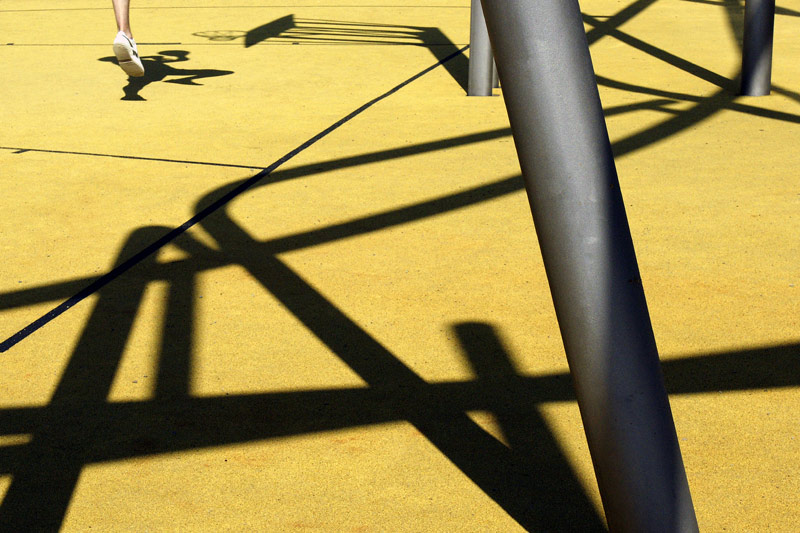
I also try to arrange several layers in my photographs, the more the better. From my point of view, compositions with more than one layer are more interesting. Sometimes I like to compare things like a double pair, to make the pictures more interesting.

After so many years of being a street-photographer my eyes are well trained to catch situations, lines and graphics, in a fraction of a second, that help me make the compositions I envision. I simply love it!

Best 3 tips for shooting the streets: Learn from Master photographers; Vacation in big cities; Always keep your eyes and mind open. One more thing: keep shooting. When I shoot, I may not capture the big one all the time but I shoot many small ones to train myself to recognize the big one.
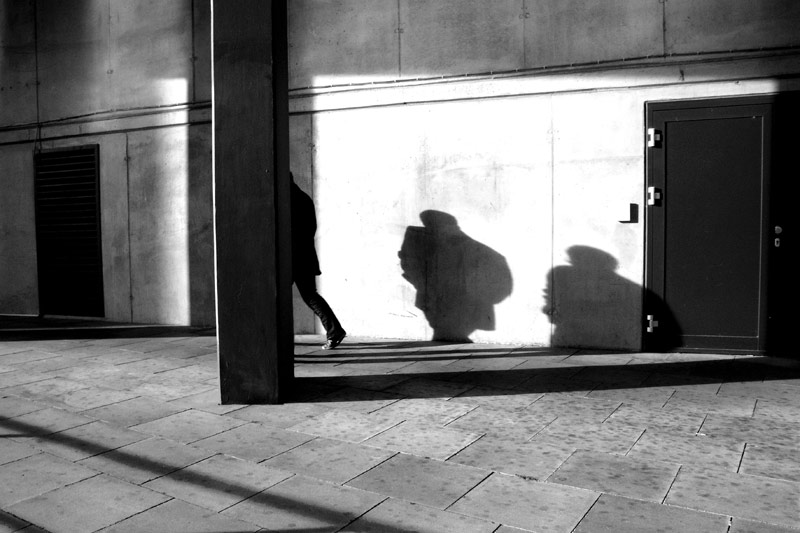
Best single advice on how to edit or improve your work. When you edit images it is the same as shooting pictures. You see the results of the day and some pictures are better than others. Some might even be top. But keep in mind, you just don’t see a good picture every time. And you don’t have to. It’s all about selecting the good ones. Quality over quantity.

Another thing I do. I often make small (13x18cm including 1cm border) prints of my favorite photos from Photoshop. Later on, when I look at them again and again, I print the ones I like most in a larger size (30x45cm) and hang them up in my apartment. And if I still like them after 3 weeks, then I’m satisfied and happy.

Best single advice for someone who wants to get into street photography: Get inspired by Master photographs.
What’s the best moment in your street photography career? To participate in the “Street Photography Now” book (Thames and Hudson)
What’s the worst moment in your street photography career? Each time when the battery of my camera is empty or my memory card is full.
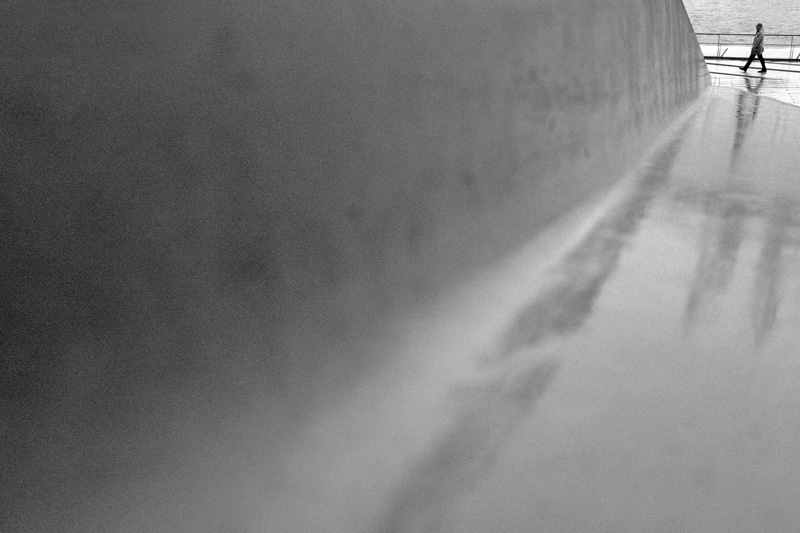
What projects are you working on? There are many, but at the moment I’m not ready to talk about them. However on my homepage, you can check out the section “projects”, where you can see some photos of ongoing long-term projects. Some of the projects have been going on for 10 years.

Where do you want to be in 5 years with regard to street photography? I would be lucky if I could still walk around, take good pictures, and have wonderful feelings about my walk. And I would be happy, if a lot of people like my style of art.

Are there exhibitions planned in the future? Yes, a solo exhibition at the end of August 2012 here in Hamburg, Germany, at the Gallery Kunst-Nah.
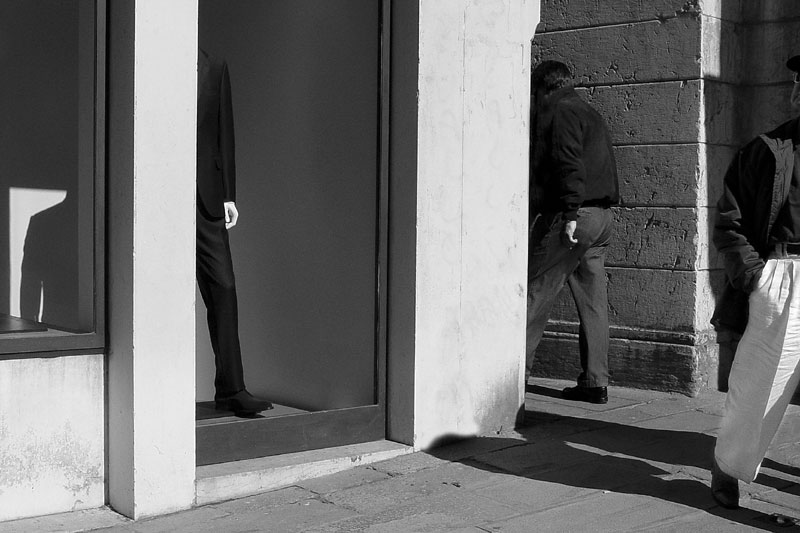
Leica Liker thanks Siegfried for sharing his experience and inspirational advice with us. :-)We look forward to checking in on him in the future.

You can check out Siegfried’s gear in “Liker Bags’n Gear here”.

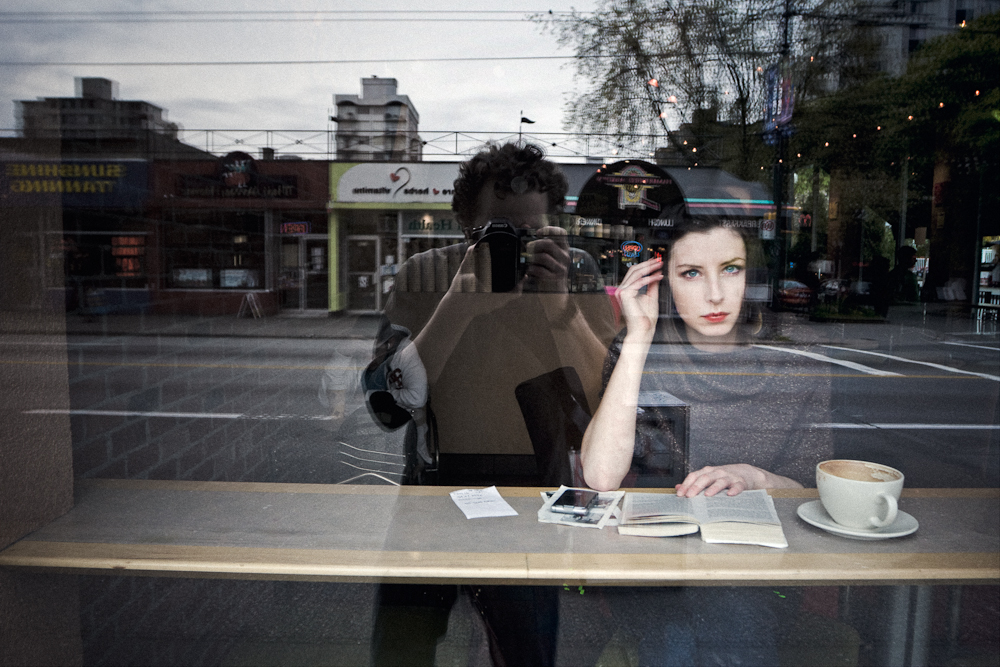
This is Siegfried’s self portrait.

#3 JOHN GOLDSMITH, Vancouver Street Photographer


Leica Liker is excited to introduce our # 3 guest, John Goldsmith, an American street photographer, now living in Vancouver, Canada.

John came to us as a photography ‘insider’, by way of his first job making emulsions in a film lab using a squeegee and silver chloride. A bonafide chemist who studied photons for his masters degree, he also took lessons on negative film developing. So it was natural that he carried a camera and eventually became a photographer.


What attracted me to John’s photographs is this sense of sleek modernism. His images have a chemistry that is between shimmering new light and young cities that don’t have deep roots. Or maybe it’s that he grew up in Detroit, Michigan, a city that spawned from a once modern age of transportation.


John talks of ‘theater’. When you study his photographs, they bring a distance to the image that feels like a scientist studying its subject. And true to his scientific roots, his ‘theater’ often poses more questions than give any answers. And that’s what he aims for when he shoots. This constant questioning makes the photographs alluring – You want to find out more about the story behind the picture.

This is my interview with JOHN GOLDSMITH:

Nick Name: Waxy
Currently living in: Vancouver, Canada
Motto: Don’t have one.
Profession/Job: Professional Photographer

Street Photographer since: 2006
Websites: www.johngoldsmithphotography.com and www.twitter.com/#!/jogofoto/
Organizations or Group: Strange.rs and Street Photographers

Favorite Street Camera & Lens: Canon 5DMkII + Canon 17-40mm f/4 lens
Back-up Street Camera & Lens: iPhone 3Gs
Favorite photography gadget: The J-strap – a handy camera strap custom made by my friend Justin Barnes.
Favorite street food: Coffee. Vancouver has no shortage of great cafes. Espressos. Pour-overs. You name it. If it’s made well, I’ll drink it, hot or cold but I prefer lukewarm.

Do you listen to music while shooting? Only if I’m using my iPhone. Otherwise, never.
Favorite music when shooting and/or editing Photos: Usually I’m in my own no-music zone but with my recent project I’ve taken to the Talking Heads. Speaking of which, the intro to ‘Psycho Killer,’ as my wife pointed out, is the same as the opening to the Fraggle Rock theme song. I apologize if any of your readers like the Talking Heads because they will never think of Psycho Killer in quite the same as they did.
Favorite photo software: Adobe Lightroom 4. It’s the only software that I believe is offered at a fair market value and every photographer should use it. I don’t say that about many things.

3 Favorite Master Photographers: Alex Webb, Trent Parke and Garry Winogrand.
3 Favorite Contemporary Photographers: There are so many deserving photographers making incredible photographic images today that having to choose just three seems an impossible task. What I’ll say is that Flickr’s HCSP group has helped produce and introduced me to some of the most amazing contemporary street photographers around. Personally, I’ll be forever thankful for it’s impact on me and my photography.

Which 3 photographers’ prints do you own? Sadly, I don’t even have three prints, let alone two, from other photographers. It’s something that I want to change. I’ve even gone so far to coordinate with other photographers to swap prints but none of us have committed ourselves to getting to the post office. But by year’s end, I am going to make this happen. But honestly, lately I’m more into the idea of book swapping. Photographers should publish more books.

I do, however, have a very nice black white print that my wife purchased for me from a student at Parsons (New School, NYC). My wife was a doctoral student at the time and there was an art show, if I recall. Sadly, when I got the print there was no name associated with it. Don’t photographers sign their prints anymore? So even though I keep it front and center in our home, and consider what it shows on most days of the week, I don’t know who made it. Not only should photographers make more books but they should use some sort of signature or ‘chop.’ Along with the democracy of everything, which is a good thing, there seems to be this nonsensical idea that signing or even entitling a work somehow makes it bourgeois.

Color or Black and White? Definitively color. But I think photographers should shake up their approach now and then, if not for the challenge alone, then to keep from becoming static. In a 2010 public lecture, Fred Herzog, who has become a bit of a legend in Vancouver and now elsewhere, said: “You have to take risks. You have to take risks even now. And if you go out, and you take only safe pictures, you have not achieved anything. You have to make a hole for yourself every day you go out and you take 50 pictures, at least a few of them have to be risky. I mean technically risky. You have to do something you have never done before.”

When I was studying for my Masters in Chemistry, I remember hearing that academics change their research area every 10 years. Photographers should do this, too. There is not only the subject matter that’s important to a story but an aesthetic as well. They form a symbiotic relationship and I don’t think either can survive very well on their own, or at least, they survive better together. Trent Parke is very good at this and he chooses the format by project to better describe his narratives. Few photographers take on this challenge. Maybe they get sucked into forever improving their portfolio, or something, but there is more to photography than just that.

Shoot Film or Digital? Ha. Digital. Though I learned to use film first. My first thought is as a professional photographer I would never shoot a wedding or event on film. It would be a nightmare – scanning, colour correcting, and archiving. No thank you! Consistency of the process and product between my personal and professional work is vitally important to me and so shooting digital carries over to my personal work. Regardless, the differences between film and digital aesthetics are shrinking. Even if they may never be the same, they both have their place for the time being.

Additionally, in a former life as a research chemist, I used to not only process my own negatives but I literally manufactured film. Needless to say, I know my way around the darkroom. But there was a time, shortly after my twin daughters were born when. I took some newly exposed negs and was prepared to develop them. I wasn’t in the right mindset and, in retrospect, I knew it. Call it a lack of sleep or some other parental excuse. Regardless, even as a chemist who was trained to triple-check the chemicals, I first dumped fixer right into the pot. That was it. I immediately recognized the mistake and tried to wash them and reprocess them but it was far too late. Those pictures, and whatever was on them, were gone. No image, not even a latent one, was left. That was the last time I processed my own negatives. If it weren’t for a stash of film archives, I’d probably also sell my very nice scanner. I hear they are as good as gold these days.

If Film, what type of negative? I used to like several color films including Portra, Velvia and Superia. I don’t really have a favorite of those but my favorite monochrome is without a doubt Neopan 400 pushed two stops.
Is there a special time of the day you like to shoot or is any time good? Any time of day works. I find it more difficult these days just because I seem to be getting busier with both work and family. It’s rare now that I get to shoot street which is partly how I drifted onto a new project that I’ll discuss a bit later. My preference, however, is strong but somewhat oblique sunshine.

Why did you choose Street Photography and not another form of photography or stamp collecting? Probably like most boys (and maybe girls, too) in and around Detroit, I wanted to be a car designer. I used to scribble and scratch futuristic designs on paper. When I went to university, I began taking classes in industrial design. We had a field trip to a local Ford factory. What I remember is a visceral dismay of the industry where factories could easily replace Mordor from Lord of the Rings – shakey metal stairs in pitch darkness with flaming infernos in the distance. That was no place for me as some hopeful kid.

But as far as why Street Photography – I enjoy walking with a camera. I enjoy navigating the landscape and interacting with people, even if the latter only lasts for an instant. I also like psychology, sociology, and philosophy and maybe street photography juggles those three disciplines to my satisfaction.

What motivates you to photograph the streets? Even though imagery from street photography leans to a fiction account, it’s my wanting to understand people that drives me. While people tell me I’m a good writer, I don’t usually have the patience to put pen to paper. Taking pictures is quicker and is more descriptive for my purpose. It’s a bit like Slim’s Table, I suppose, if there are any sociologists out there. It’s descriptive. A variety of people come into this cafeteria and share what they have, even if only for an instant. Having access to so many individuals could prove to be quite daunting with any other method than photography.

Is Street Photography an obsession? It started as an obsession but now I have family so there’s less time. With children, I can’t carry as much as I used to. So now I want to simplify.
Are you a lone shooter or do you like shooting with friends or a group? I love to shoot with other people. I take people on photowalks all the time. Since 2005, when I first got onto Flickr, I was able to get a lot of people involved in trips to see Fred Herzog’s exhibits. I have children and spend a lot of time with them. So I’m not distracted by other people. Fortunately my wife appreciates what I’m doing here.

Favorite street photography city: Well, cities are exciting but I’m happy to be anywhere with a camera. I could be on a farm and still enjoy making the same kinds of pictures, although I’m an urbanite at heart. I would say, however, that “the city” is almost the problem for street photography because many people are taking the same kinds of photos that have existed for a half century or more. People are drawn to a certain edginess but I don’t think most people realize that what they are capturing doesn’t carry over well a flat picture. They’d be better off not trying to replicate what’s been done and to turn the camera on their own family and friends. That sort of access can help create a certain uniqueness that nobody else could replicate. But, if I had to choose one place I’ve experiences, Sydney, Australia has to be the most agreeable with the aesthetic that’s currently driving my street photography. But Melbourne is a close second – and they have better cafes.

What inspires your photography? Certainly the work of other photographers drives me. But I like philosophy, too, even though I have no formal training. Fortunately my wife does and so she gives me some guidance. That’s a dangerous thing – an armchair philosopher! Now that I no longer practice chemistry, I wish I would have concentrated in a different discipline, a field of study more pertinent to my current passion. But we can’t predict how our lives will move and being a scientist suited me then and hopefully now by strengthening my reasoning skills. At least, that’s what my friend always tells me.

What do you look for in a good photograph? Getting back to your earlier question about which prints are on my wall, I admit that one of the reasons I don’t have more is that I’m frightfully picky about art and design. The print I mentioned earlier from the New School keeps me coming back. I look at it frequently and I never get bored. Those are the photographs I want on my wall. The ones with multiple focal points, tension and questions. I’m leaning more strongly than ever to the “incomplete” photograph as David Alan Harvey calls it. The photo, which forces the viewer to add their own opinion. The boring shots are the ones that tell you exactly what you’re seeing and add nothing more. Personally, I’d rather have a series on the wall that rotates than a line of single shots. That’s why I wish photographers would focus on books. They are more complex. And, much more affordable!

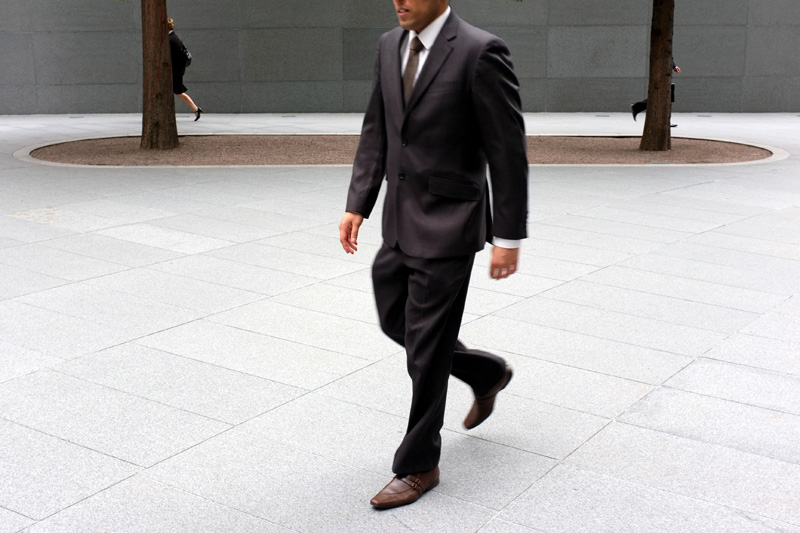
How do you go about shooting a street photograph? I believe good photographs happen everywhere. I’m always looking around, keeping my eyes open for anything and everything. But I don’t have much patience to wait. 3-5 minutes wait is tops with very few exceptions. By waiting you may or may not get the shot. I usually just follow my instinct. For instance, the photograph with the five guys walking in suits. I was watching the Alec Sloth exhibit with my family. The space was nice and interesting. I saw the guys and followed them around a bit. I’m not methodical, but more spontaneous.

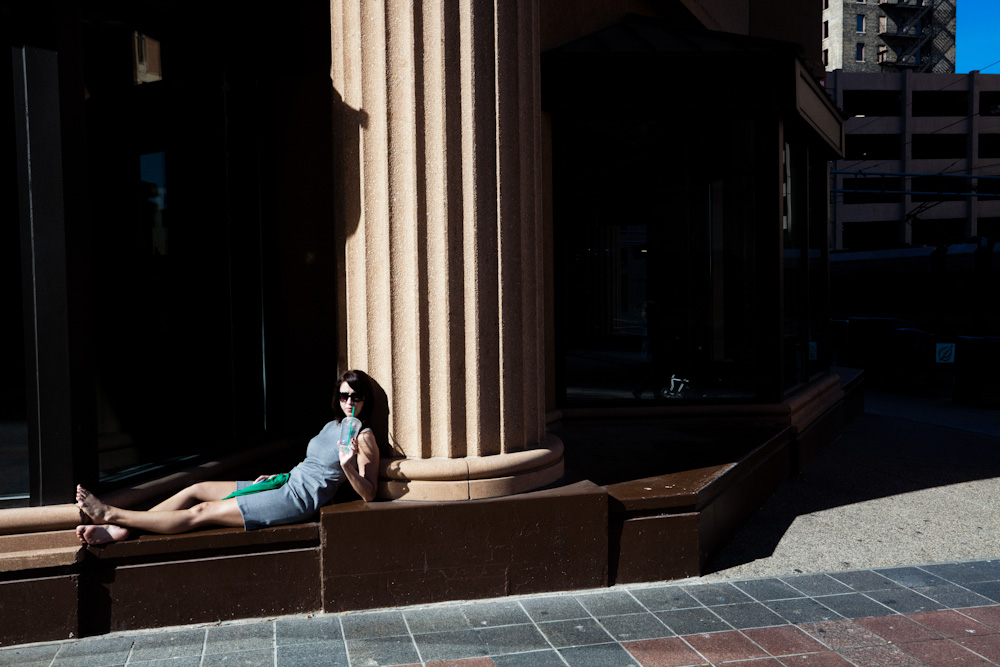
I want to be able to make a shot work in any place. I do a lot of environmental shots. When I do, I plant myself. It is like a game to get all the lines and elements together. For instance, the shot of the woman walking with the umbrella behind her is one of my best. That was a waiting game to get people to fit in.

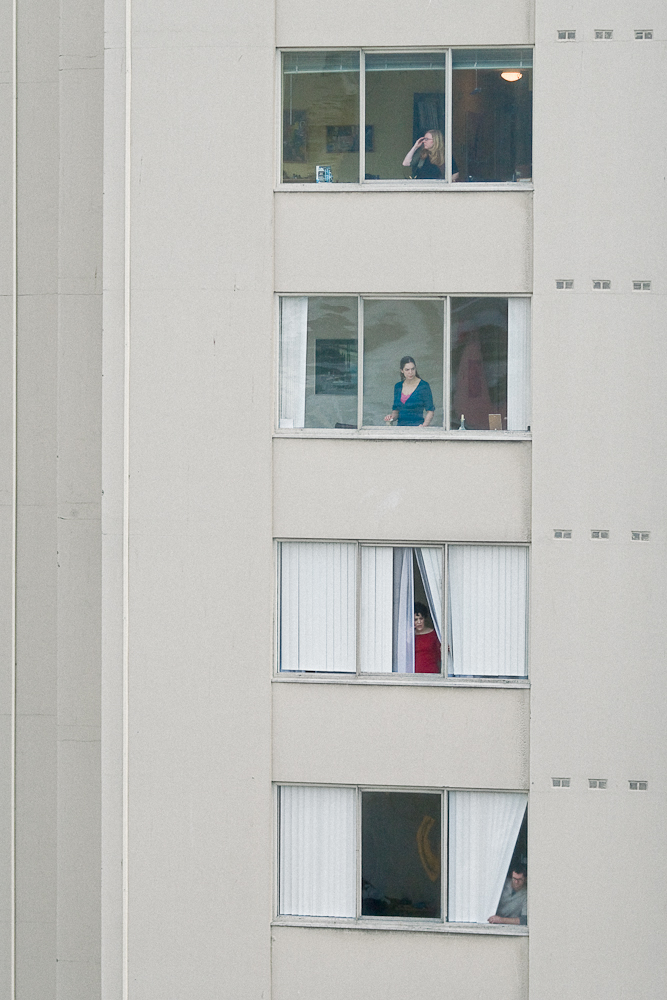
Yet on the other hand, the shot with 4 people looking out the window in a highrise. It’s a view outside my window. It just happened one day that they all looked out the window. These shots can happen anywhere is what I’m saying.

When you compose, what are you looking for? It’s really about balance. My shots are less formal with regard to formal composition. Garry Winogrand says, ‘photography is not reality, it is light on paper’. I agree with him. It’s about the balance between, light, dark and color. To find balance, I often look at black spots in the shot as mass or gravity, or weight. I use it to frame light and color. They float within the weight of the frame.
Best 3 tips for shooting the streets:
1) Know your camera.
2) Wear good walking shoes. Then,
3) Take the train to the end of the line and walk home while taking pictures. Doing that last part was just about the best $3 I ever spent.

Best single advice on how to improve your work: My Grandma Mary (b. 1906) was told by her mother that if everyone was running towards an emergency, she should turnaround and go in the other direction. One day, I’m told, a number of people rushed towards the flames and toxic smoke of a burning hospital – to gawk. She, in turn, did what her mother told her and went straight home. As it happens, many people got sick from the fumes. Heroes aside, I assume that many of those people just wanted to watch the events unfold. But those are not the pictures I’m seeking. Gawking at what’s obvious can create obvious pictures. Sometimes just turning your back to the obvious thing will create a more interesting photograph. Think of those Olympic photos where all of the photographers were forced to sit in the same box and snap away for three hours. Trust me, you don’t want those pictures anymore than I do.

Best single advice on how to edit your work: You have to start with a theme. I don’t think a good edit can come from just pictures themselves. You have to have an idea. Again, Fred Herzog says it best:
“Who says I didn’t learn a lot from the movies? Absolutely. You know, what we put into our pictures is not a smart idea. What we put into our pictures is our whole life and our whole intellectual discourse. Everything we know and everything we have done and everything that’s in our history goes into every single picture we take. Have you ever thought of that? That’s how it is.”

Even a portfolio can have a theme. But you have to start somewhere. After that, find a photographer/editor you trust to help review your work. You can’t do this in a vacuum. Go and read John Dewey’s ‘Art as Experience’ where he talks about art and how a vital aspect of it is how the viewer interprets the work. A photographer cannot begin to imagine all of the ways others will see their own pictures or how they coexist. How many times has someone pointed out something in your own work that you did not see for yourself?

Best single advice for someone who wants to get into street photography: Get a camera. Get any camera that allows you to shoot without frustration. Making pictures should be as simple as possible. If you can’t see the viewscreen because the sun’s too bright or the camera isn’t adjustable to your liking, you won’t enjoy the experience and you won’t connect to the strangers in the street. Ultimately, you won’t make good pictures or a good edit. This genre is frustrating enough because of its inherent challenges. One doesn’t need a camera to make it more troublesome.

Also, forget about one hit wonders, grand slams and slam dunks. Those shots will come but it’s better to begin thinking of ideas. These can come from books, music, or other people’s photographs. The photo just represents the art but it’s not all of it.

What’s the best moment in your street photography career? Having two prints, one of which is A1 format, accepted into the Head On Photo Festival. I can’t wait til this Summer. If only I could return to Australia to actually see the print in the exhibit!
What’s the worst moment in your street photography career? Honestly, I can’t think of any. I’ve never had any serious run-ins with angry people. If a moment doesn’t go my way, I won’t get bogged down. Carry on, I say For anyone who has taken as many street photographs as I have, they know that even the shot’s that feel right often are not. You might suspect but you can’t know that a shot works until you have the time to study it. If one could really evaluate a photograph that quickly, it probably wouldn’t remain interesting for very long even as a print.

Also, I don’t believe there is any one single moment that needs a picture taken, barring maybe a wedding kiss. There are a lots of photos happening everywhere and all the time. The trick is becoming aware enough to your surroundings and then be quick enough respond. But if you miss it, there’s no reason to fret it – from a probability perspective, the shot probably wouldn’t have been good anyway. Like I said: move on.

What projects are you working on? In 2011, I spent nearly 6 months in Australia. During that time I was developing a project called “Flat White Short Black.” I’ve spent many hours thinking about it, editing the work and researching book design. I’ve made a few test prints and hopefully I’ll publish it by the year’s end. It’s a long process which can be frustrating at times. But also don’t think long term projects should be rushed.
Where do you want to be in 5 years with regard to street photography? Until last year, I mostly concentrated on single shots. While there are themes, I would like to move into more project-based work. I’m already going down that road as I mentioned above. I recently finished working on what I consider my most exciting work to date. It’s based on street photography but it’s rooted in conceptual photography. The idea is based on impermanence. It’s titled ‘Drop Out of Art School’. Schedule to launch on Strange.rs on May 1. The book launch is scheduled for June 1. There’s a bit of a teaser here.


Congratulations on your upcoming exhibition at the Head On Photo Festival. Are there other exhibitions planned in the future? Beyond Head On, I have nothing planned as far as exhibitions are concerned. But I have two books in the works, as I previously mentioned. That said, my home is in an 80-unit work-live artists’ residence. Along with a studio, we have a massive gallery that’s as big and beautiful as any private exhibition space in the city. It’s absolutely stunning. What’s tragic is that the gallery has been used maybe once in 12 years! I’m planning to change that. At our recent general meeting, I took on a post with the newly designated art committee. I can’t wait to get started! Even better is that I can use the space, not only art shows but, for photography education classes which I plan to begin this summer.

Leica Liker thanks John for sharing detailed thoughts and experience with us. We will definitely revisit him again.
You can check out John’s gear in Liker Bags’n Gear here.