Skip to content

Posts tagged ‘color street photography’

First Impression of the LEICA M MONOCHROM (Pre-production Model) PART 1

O was able to get the Leica M Monochrom preproduction model loaner for a couple of days, thanks to Ebehard “Ebby” Kuehne (Leica District Manager) and the notorious Tibor Szilagyi (Samy’s Camera, Los Angeles). The minute we got it, we went out to play. And wow, did we have fun.

We have many images to show with varying degrees of success (It’s not all art.), so I have decided to do a two-part post. The second part will be primarily images while this first part will be my ‘report’.

ISO 400, F16, 1/350 sec, 35mm Summilux

DISCLAIMER!!!: My review is only based on the images I take and how user friendly the camera is. Some images will be post processed with slight crops (to straighten the shot) and pushing or pulling on the contrast, darks, and brightness. That is about the only post work I do. And, my bias is based on if the camera helps me capture the image I envisioned. I am not knowledgeable about equipment from any technical point of view. So if any one expects to read detailed specifications or any tech reviews, there are other sites that have the expertise. You can go to L-Camera Forum here to find out a list of all the reviews of the Monochrom. You can check out all the specifications at the Leica site here.

ISO 400, F16, 1/250 sec, 35mm Summilux

“The virtue of the camera is not the power it has to transform the photographer into an artist, but the impulse it gives him to keep on looking. – Brooks Atkinson (Pulitzer Prize Theater Critic for New York Times) – 1951, from his book- Once Around the Sun

ISO 400, F 16, 1/180 sec, 35mm Summilux

One of the greatest feeling one can ever experience when you have a new camera in your hand, is the intense desire to be a great artist or photographer or both.  Somehow, the camera will give you the power to create amazing photographs. Why buy a new camera if it can’t empower you, right? Well, the Monochrom didn’t disappoint. Not that our photos are amazing, but it gave both O and I that warm and fuzzy feeling we wanted.

Monochrom ISO 400, 1/180 sec, 35mm Summilux
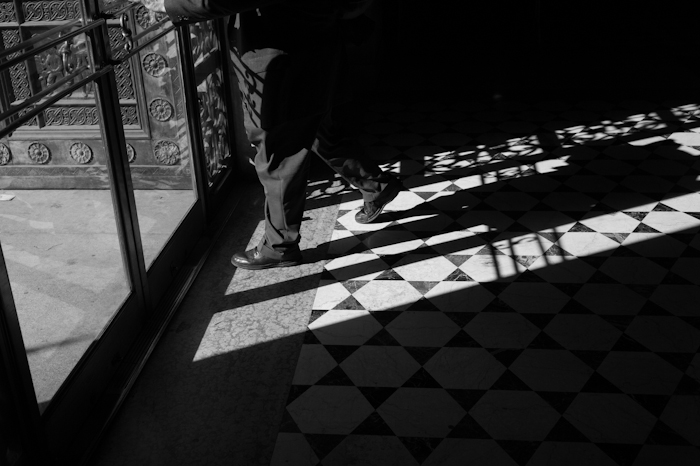
M9 Converted ISO 400, F6.7, 1/750 Sec, 50mm Summilux

The last four times I went out shooting, I came back with nothing worth looking at. O and my fellow street photographers had better luck than me. I was rather depressed, wondering when was I going to get out of this horrible slump? Then O told me about getting a Monochrome loaner. You can imagine how ecstatic I was. This was the camera that could take me out of the slump.

ISO 400, F16, 1/250 sec, 35mm Summilux

Once we had the camera in our hands, all we could think of was making the shot. But the pressure was huge to get something worth the privilege. We had limited time – two half days (we still had our day jobs to contend with and the availability of the camera was spur of the moment). So don’t expect major testing in this post although we did do a few.

ISO 400, F16, 1/125 sec, 35mm Summilux

O and I both shot with aperture priority ranging from F8 to F16 for exteriors and F1.4 to 5.6 for interiors. Unfortunately, when I loaded the images into Lightroom 4, the exposure information only registered the shutter speed but not the aperture (darn!). I hope this will be fixed with the updated firmware when the production models come out. I noted the F-stop when ever we were able to recall. The ISO’s vary and is noted with each photo. And generally, we zone focused every time.

ISO 160, F 8, 1/60 sec, 18 mm Super Elmar M

THE BASIC PHYSICAL

Let’s start with the physical characteristics: It’s effectively the M9-P. But the finish is a little different. The vulcanite on the M9 is replaced with a finer textured leather that’s nice to the touch. The metal is matte. There’s no logo or dot except for the tiny “Leica Camera Made in Germany” engraving on the back.
 The weight with battery is 600g (21 oz).
 The same as the  M9-P. I will talk about LCD screen, Menu, Frame Buffer, etc. as separate items below.

ISO 5000, F 5.6, 1/250 sec, 21mm Summilux

ISO BUMP

One of the newest and much awaited attributes of the Monochrome is the increase of the ISO range from M9’s highest of 2500 to Monochrom’s highest of 10,000. Leica didn’t change the 18 Megapixel M9 sensor made by Truesense (ex-Kodak), but it did change the parameters on what the sensor senses. Since color is no longer a concern, there is no need for the color filters that was added in front of the M9 sensor to help it recognize and record the color in light. I understand that other things like color value interpolators and artifacts no longer are of concern to black and white images. It’s really like taking away all the various layers from the sensor, allowing it to be its original naked self. So it shines when it is able to deliver full and high resolution without compromising for color.

ISO 10,000, F5.6, 1/2000 sec, 18mm Super Elmar M

It was a pleasure to take this camera around at night or in low light situations and be confident that we could shoot some photographs without bringing a flash or having to switch to our Ricoh GXR or Fuji X100. We had so much fun with the Monochrom, including having a few drinks so we could admire the design stripped of the decorations that the M9 or M9-P has. 🙂

ISO 10,000, F 5.6, 1/125 sec, 50mm Summilux

THE BEAUTY OF GRAIN

The most unique thing about this camera is the grain. The grain is just simply exquisite. The grain is not the digital hard edged type you get with the M9. It’s a soft film-like grain. I noticed noise starts to creep in after around 7-8000 ISO. Some reviews mention the optimal ISO is 5000. You can see below, at ISO 10,000, the grain does get a little muddy but I think still acceptable. I think the grain rendition alone is a reason for the Monochrome camera to exist.
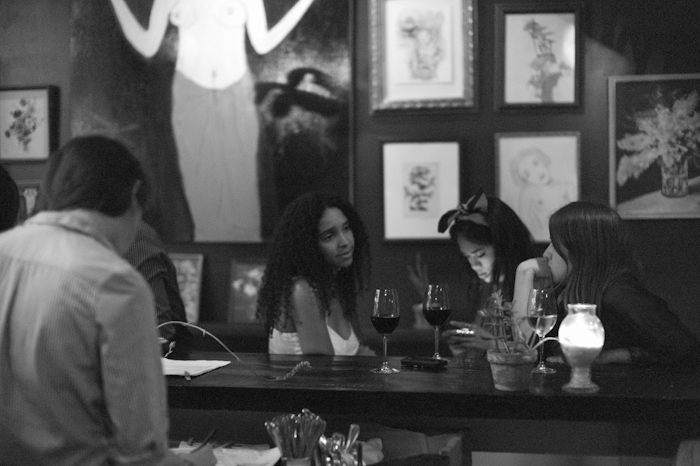
ISO 10,000, 1/125 sec, 50mm Summilux

TONES

The other most unique thing is the tonal value of the images. The blacks and grays are complex in range compared to the more contrasty M9. With the help of the new raw image data histogram, you can fine tune your exposure. The tones remind me of the way film responds.

ISO 5000, 1/180 sec, 50mm Summilux

FRAME BUFFER

At the beginning, Ebby warned us that the firmware was not ready so the preproduction model would be a little slow. He was right. The frame buffer still filled fast, slowing the computer down. After shooting continuous for 3 frames, the red light at the bottom of the LCD screen flashed for several seconds.
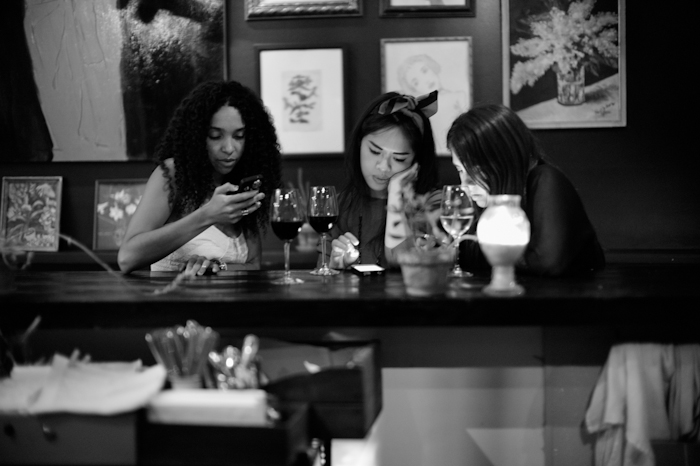
ISO 3200, 1/45 sec, 50mm Summilux 

While I could shoot a few additional frames, after about 6 to 8 shots the camera would not shoot anymore and I had to wait before I could resume. I am assuming Leica will have this part resolved by the time they deliver the production model.
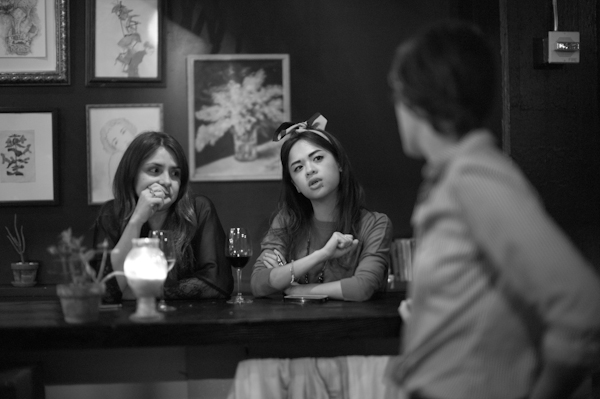
ISO 3200, 1/60 sec, 50mm Summilux
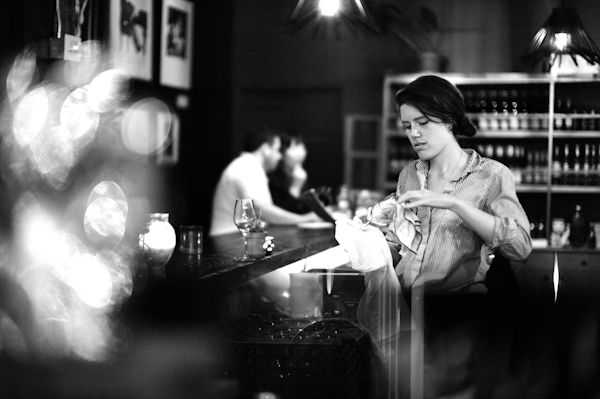
ISO 3200, F 1.4, 1/125 sec, 50mm Summilux

EXPOSURE

If you like to shoot with perfect exposure on the subject and allow the brights to blow out and over expose, then you’ll have to adjust the way you shoot. In the photo above, I center metered on Caitlin, the bartender and thought the shiny object on the left would not blow out. And the photo below, I center metered on the bread and not the light in this photo and both were mistakes.

ISO 3200, F 1.4, 1/180sec, 50mm Summilux

Had I anticipated this problem, I would have brought along my M9 or any color camera, film or digital. But, one always learn from hindsight. 🙂

This camera is best used with exact or under exposed shots. Over exposed shots do not have enough information for recovery in Lightroom. Believe me, I pushed every lever in Lightroom hoping to dig some detail out of the blown out areas and never found any, unlike images shot with the M9.

ISO 10,000, F 8, 1/1000, 18mm Super Elmar M

LCD SCREEN

The 2.5″ TFT LCD with sapphire-crystal Display screen is still the same ridiculously cheap one as the M9-P. I always struggle with focus in low lighting as you can see here despite the ‘bright-line frame viewfinder. I had hoped that since there is more data information from the Monochrom sensor, the screen would also show more detail for when I proof my focus. Unfortunately, that is not the case.

Monochrom ISO 400, 1/45 sec, 35mm Summilux

M9 Converted ISO 400, F 2.4, 1/60 sec, 50mm Summilux (see how the sensor is struggling with low light at the same ISO)

THE MENU
The Menu is basically the same as the M9 and M9-P except for:
1) The added the high ISO range.
2) The elimination of white balance used only with color.
3) A new histogram display to show the raw data combined with a clipping display. You can fine tune and optimize your exposures.  I really didn’t have time to play with this feature.

ISO 400, 1/60 sec, 35mm Summilux

RETHINK HOW YOU ‘SEE’ 

What I realize about this camera is that you have to think differently. You have to think black and white. I was frustrated several times because I saw a scene in color and when I shot it, the image did not have the meaning or punch that color would have given me. And I didn’t always have O beside me to shoot the color version. And nor did he have me all the time to shoot the color version when he was shooting the Monochrom.

Monochrom ISO 2500, 1/45 sec, 35mm Summilux (I didn’t meter this properly so you can see, the horizon is blown out and details of the distant mountain seen in the color is lost)

Since we see in color, you have to train yourself to see in black and white.  And when I use my M9, I never shoot in monochrome or view the jpeg in monochrome. I always view in color first.
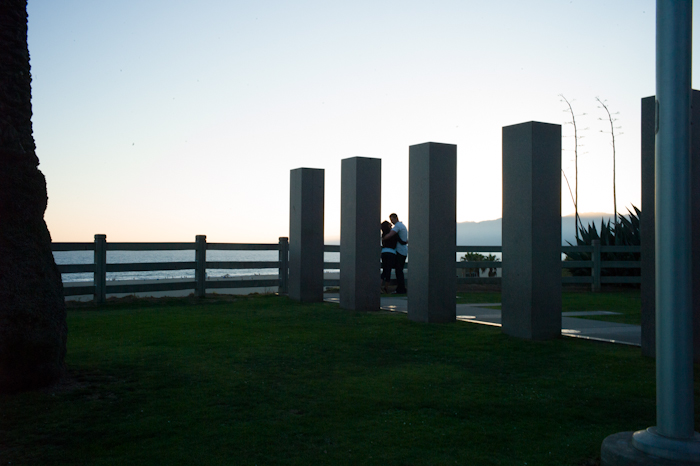
M9 ISO 1250, F13 , 1/125 sec 50mm Summilux

The other thing is you have to know the camera inside and out. You can’t be cavalier about your exposure like you would with normal color digital cameras, M9 included. The camera demands you to be more precise about what you capture in-camera as that is how it appears to be designed. Treat it like a film camera where post options are limited compared to the typical color digital camera. But you have the luxury of not having to wait for the development time of film.

ISO 400, 1/180 sec, 35mm Summilux

Professionals and amateur who normally shoot in black and white will find it easy to use. However for us, the two days O and I had the camera was not enough to wrap our heads around it. So please excuse the quality of the photography.

ISO 400, 1/60 sec, 35mm Summilux (This image is completely unprocessed-raw except that it’s a jpeg-raw)

THE PRICE TAG

At a cool US$7,970 +/- for just the body, not including taxes, the price hits you where it hurts. That’s US$1,000 more than the M9 or the same as the M9-P and you don’t have the flexibility of shooting both color and black & white. If you want the option, you’ll have to bring another camera, defeating the concept of traveling light. I wish it was at least the same cost as the M9 and not the M9-P.

ISO 400, 1/45 sec, 35mm Summilux

CONCLUSION

So what do I think about this camera? It’s funny how things take left turns in life. When Leica announced the Monochrom back in May, I was very skeptical. I thought: who would want to shoot with a dedicated camera when you have the ability to shoot color and then convert it? I also thought: who would spend so much money on a dedicated camera?
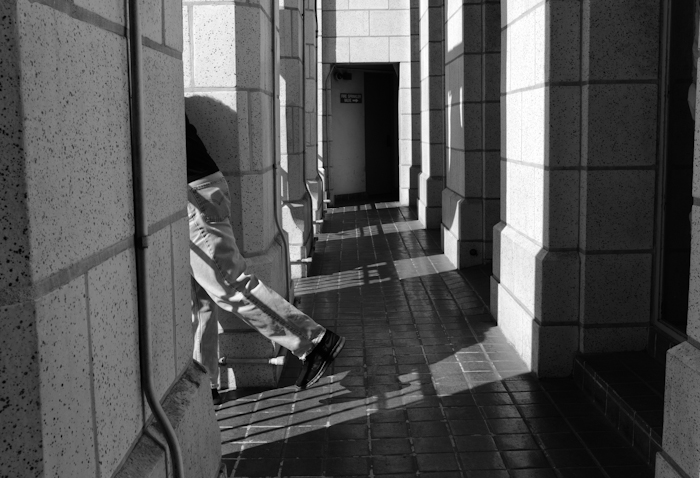
Monochrom ISO 400, F11, 1/125 sec, 35mm Summilux

The more I read about it, the more interested I became in this camera. Now that I have played with it, I can honestly say, I want to spend more quality time with it because I love it. I agree with the concept that it is the photographer’s eye and not the camera that makes the images. But we all pore over countless photobooks for inspiration, right? And now, the images that the great masters shot on black and white  film no longer seem so unattainable. I don’t mean to be presumptuous, but the desire to try to shoot amazing photos using the masters as a standard to aim for, is exponentially intensified when I use the Monochrom.
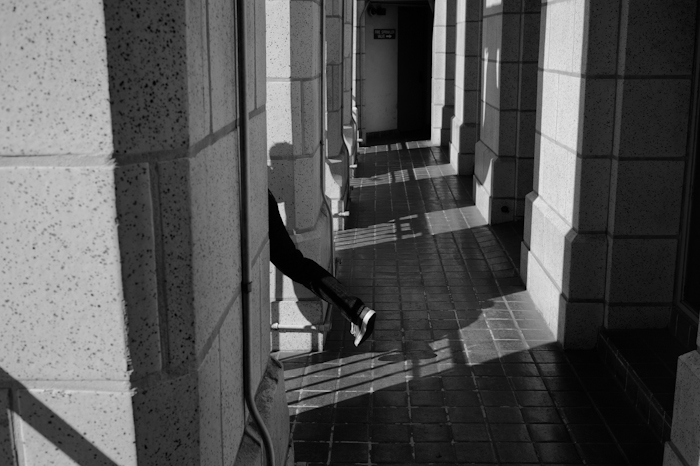
M9 Converted ISO 400, F8, 1/750 sec, 50mm Summilux

O is completely sold on this camera. He says he is already imagining the cool shots he can make with it. While we shoot with our M9 or Ricoh or whatever, O and I talk about shots that we could make with the Monochrom. Isn’t that the beginning of aiming to shoot better photography?
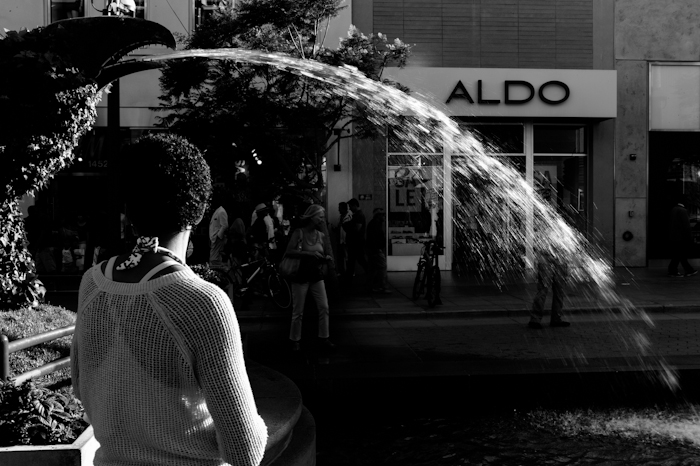
ISO 400, F16, 1/60 sec, 35mm Summilux

As the Monochrom is pricey, we have already sold various things,  just to make room for this little baby. And we can’t wait to get it and go out shooting with it. 🙂

I like to think that the Monochrom is much like the Levitated Mass by artist Michael Heizer  you see below. It’s something bold and ‘out-of-the-box’ to look at in wonderment. In the case of the Monochrom, you’re in luck. You can also use it with wonderment. 🙂

ISO 160, 1/125 sec 18mm Super Elmar M

I’ll be posting part two with a variety of images- architecture, landscape, and of course, street within the next two weeks. So keep a look out for it!!

UPDATE: AUGUST 17, 2012, I posted Part 2 here.

# 7 CHARALAMPOS KYDONAKIS, Rethymnon Street Photographer

Leica Liker is honored to have Charalampos Kydonakis, a Rethymnon (Crete) Street Photographer as our #7 guest. He’s also known as Dirty Harrry [sic], author of a very informative and purely visual street photography blog – Dirty Blog.

If you’re like me, I began my street photography journey by poring over countless photography books and of course, the ubiquitous internet. One of the first websites I came across was Harrry’s ‘Dirty Blog’. It is a wealth of information. Photos upon photos, conveniently organized into categories and alphabetized. You can see some very inspirational photos by masters, contemporaries and even little known photographers.

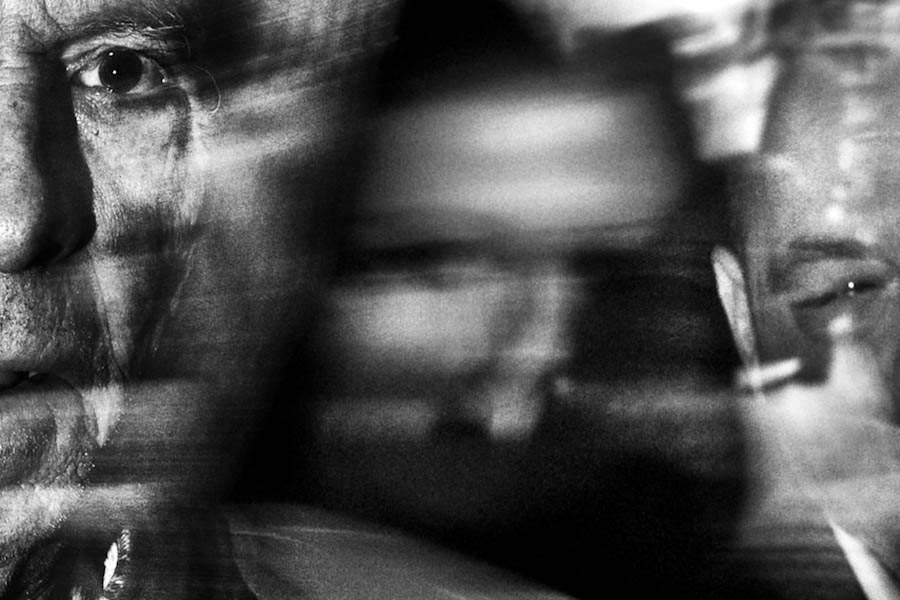
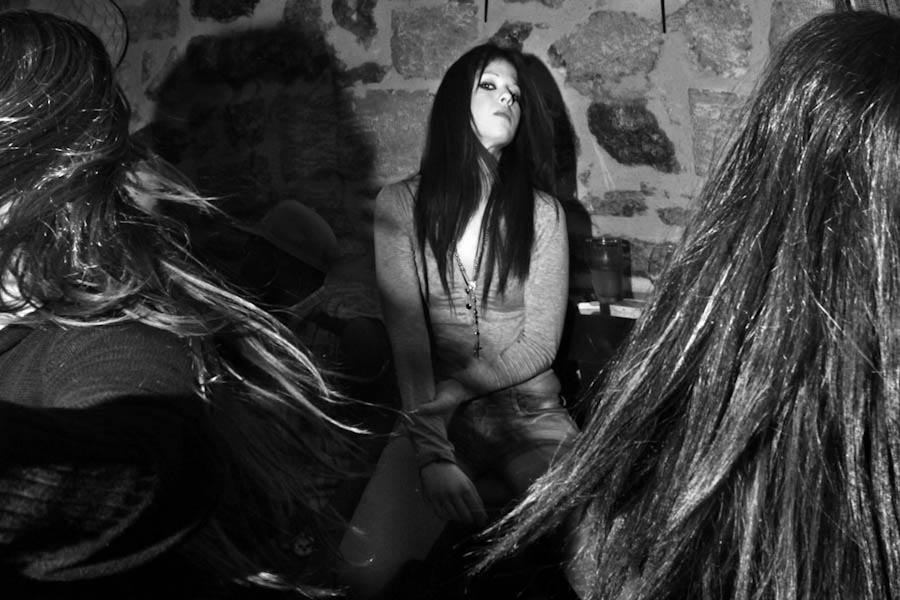
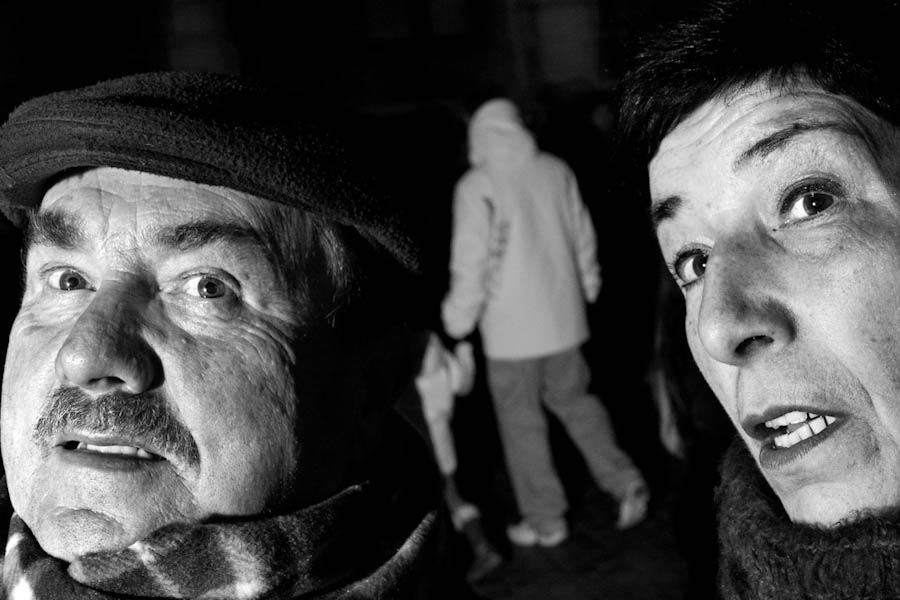
What really drew my attention was not Harrry’s encyclopedic endeavors, although I very much appreciate it, but rather his own photographic work. Many of his photos are raw images (raw in the sense of visceral) of people and animals at night,  instilled with a surprised and sometimes nightmarish vision. They occasionally hark of alcoholic induced momentary flashes (literal with flash lighting) of  the figurative paintings of existentialist painter Francis Bacon. And with a little inspiration from master street photographer, Bruce Gilden to boot.

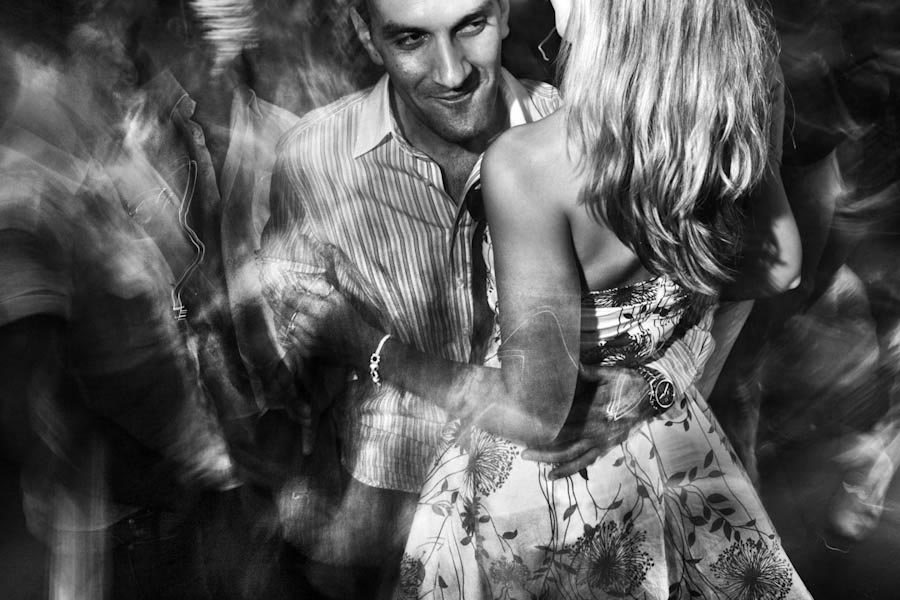
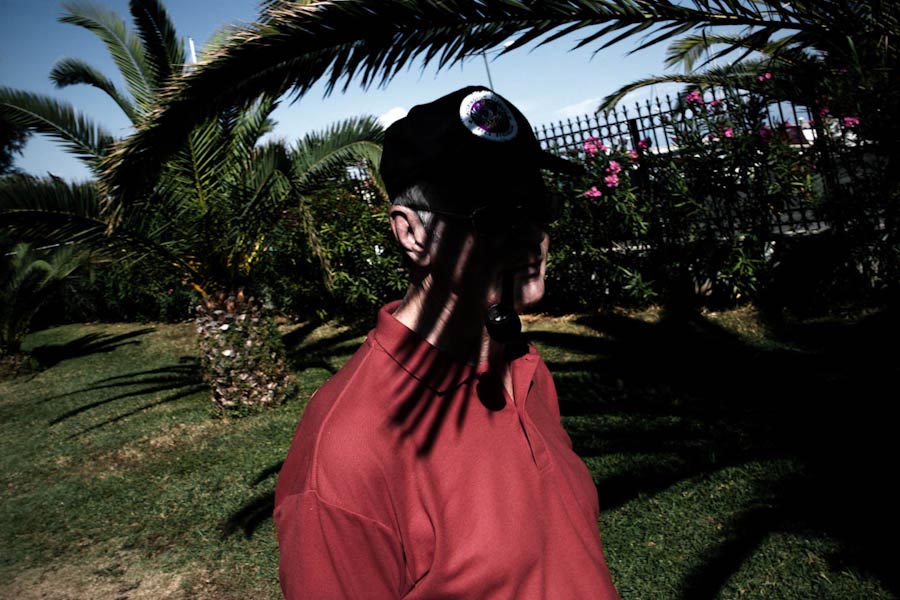
Harrry’s street photography work takes surrealism to another level, in particular his multiple exposure photographs. His use of allegory is whimsical, adding a layer to street photography that is not often seen. My favorite being the feature image here with the dog’s face overlaid over a woman smoking. Some have a twisted sense of humor which often appears even in his less ambitious street photographs. And his subjects are not always shown in the most positive light.

We live in a world where we are bombarded by images of flawless people, photo-shopped to absolute perfection no matter if you live in a developed or underdeveloped country. So it’s refreshing to see artistic images that poke fun or simply point out the banal side of our human selves.

Here is my interview with  CHARALAMPOS KYDONAKIS.

Nick Name: Dirty Harrry
Currently living in: Rethymnon, Crete
Motto: If I get to 80 years old, maybe I ‘ll have one.
Profession/Job: Architect

Street Photographer since: I started shooting street photos in 2008. But I consider myself just a guy with a camera shooting and not strictly a street photographer.
Street Photography Blogger since: March 2011
Websites: http://dirtyharrry.blogspot.com  and http://mydreamsyournightmare.blogspot.com

Favorite Street Camera & Lens: Canon E60D with a Voigtlander Colorskopar 20mm , f3.5
Back-up Street Camera & Lens:  I don’t carry a backup camera. I always carry a second battery and a second memory card. When the batteries run out or the cards fill up then it’s time to put the camera back in the bag and go get some rest.
Favorite photography gadget:  My bicycle and my sport shoes.
Favorite street food: Beer

Do you listen to music while shooting? No
Favorite music when editing Photos: Astor Piazzola, Vicente Amigo and many more.
Favorite photo software: I open the raw archives with Lightroom 3 and the jpegs with Photoshop CS4.

3 Favorite Master Photographers: Weegee, Martin Parr, Garry Winogrand, and  Diane Arbus. Sorry. I couldn’t end up with 3.
3 Favorite Contemporary Photographers:  Martin Parr, Bruce Davidson, Trent Parke
Which 3 photographers’ prints do you own? Unfortunately I don’t have prints by others. The only prints I own are about 30 of  mine. Unfortunately, I have not been able to see all my photos printed.

Color or Black and White? In the past, I shot only black and white. Now, I think  about 5-10% of what I shoot end up in black and white. I only turn to it for a few photos, mainly the ones that I shoot at night. It’s difficult for someone to throw away the easy vintage-romanticism of black and white photography and create something with valour in color terms. But I believe this is the challenge. I still like black and white photography and haven’t rejected it. But I think the future belongs to color.

Shoot Film or Digital? If there were someone to develop and print for me for free, maybe I would shoot film. Right now I think spending time and money in developing and printing can make someone a better printer, but not a better photographer. Time is more important to me than exposure tolerance, grain etc..

Is there a special time of the day you like to shoot or is any time good? I like to shoot early in the morning (unfortunately this can happen only on weekends and vacation), or 1-2 hours before sunset. The light in the beginning and the end of the day is beautiful.

But most of the time I prefer to shoot at night. It somehow has different rules from the day. In the day you can be invisible.  At night I use a flash. You can’t be invisible and I don’t’ care.  I just shoot. Most of the time it doesn’t work. But once in a while you get lucky. You just have to shoot a lot. It doesn’t matter if it’s day or night. The more you shoot; the more you read; the more you see what other people shoot; the more it helps your photography.

Why did you choose Street Photography and not another form of photography or stamp collecting?  I bought my first analog camera in 1997 while I was at university. It was required for my studies and work. At that time, I shot only buildings and urban spaces. In 2008 I bought a digital camera and started to shoot more. Then I saw some Magnum photos and realized that I would like my photos to tell human stories.

Street photography is what gives me adrenaline. But lately I have started to shoot anything and everything, not only street.

What motivates you to photograph the streets? I like the surprising wind that blows out there. You never know what to expect. It’s a challenge to walk endless hours trying to discover things around me.

Is Street Photography an obsession? I think photography is an obsession, no matter if it’s street or not.

Are you a lone shooter or do you like shooting with friends or a group? When I shoot strangers I want to be alone. It’s definitley fun to go out shooting with friends but if I look at the final result, all the times that we didn’t separate while walking I ended up with nothing. I need to concentrate. But I do have a few photos of my family and friends that I like. And finally, I don’t care if the subject is of strangers or friends or whatever. I just care that I end up with something worth viewing.

Favorite street photography city: I ‘ve shot in some European cities and it’s nice to shoot anywhere. But as everyone’s finest work is a result of how much time he has spent somewhere, I must say that my favorite photos I have are shot in my town, Rethymnon in Crete.

What inspires your photography?
-The work of masters of photography and a lot of contemporary photographers
-Movies by Sam Peckinpah, Akira Kurosawa and Luis Bunuel
-Books by Nikos Kazantzakis and Gabriel Garcia Marquez
-Alcohol

What do you look for in a good photograph?  The composition and the possible story that might come out of something unimportant that passed before the photographer’s eyes.

How do you go about shooting a street photograph? I always carry my camera with me. Whenever I see something that catches my attention I go close and shoot one or more photos.

Is there a philosophy or aesthetic behind your compositions that you apply to your photos? Back in 1997 when I was in university, we had a drawing and painting course. Instead of just drawing, my professor wanted us to present black and white photos of what we saw. So I bought my first camera. I learned how to ‘see’ and compose that way.

The main thing is I shoot a lot. I also spend time looking at other people’s photos. Maybe I get some ideas that way. I’m sure it’s in the back of my mind. So when I go out and shoot, I might see something and find a connection between what inspired me and what is in the street. But none of it is conscious.

As for aesthetic – My images may seem surreal but it is my effort to interpret reality. What I mean is, you see something real and then you give metamorphosis to it. If there is no metamorphosis, then you are just documenting life.  Documentation is somehow objective and I want it to be subjective. I want to tell my story. I’m not interested in documenting life.

I also love spontaneity. When I drink alcohol, I always experience spontaneity.

You’ve been shooting more multiple exposure shots. Is that your new aesthetic? I get bored doing the same thing. I wanted to try new things. There was a time I did ‘Gilden-type’ street portraits. This has its limits. I needed to get over it and move on. And street photography has its limits.  We must be as open minded as we can.  In the end, I don’t care about labels- I just care about what I see and if I like it or not.

Are the multiple exposure images planned or random? With multiple exposures, you only see the first frame. The second, third or subsequent layers are done by instinct. I know the focal length and I know my 35mm lens well and the specific angle I will get from a specific distance. That’s it.

When doing multiple exposures it’s more conceptual and less spontaneous. I have to think 2 or 3 frames in advance although the shots are made up of spontaneous un-posed moments. But in the back of my mind I have to try to combine these things.

Why did you start a street photography blog? I began with a Flickr account to post my work. But I wanted to really show my images. At the same time, I was looking at a lot of photos from other photographers. And I would come across photographic diamonds.  I discovered so many good things that I wanted to share them. I also want to see these gems again and again because they are inspirational to me. So I decided to present their work in my blog along with my own images.

You’ll notice my blog is about showing photos and not a lot about my opinion of the work or the photographers. I just want to show photos.  I get bored reading too much. For instance, I don’t care to read about tips.  Photography is about images.  I don’t care if the photographer is famous or not.

Why did you name your blog “Dirty Harrry Blog” (now titled Dirty Blog)? I don’t know. Harry is short for Charalampos. It’s  pronounced ‘Haralampos’. The ‘C’ is silent in Greek. And then there are my dirty photos.

Best 3 tips for shooting the streets:
What I usually do is:
-Try to forget everything and concentrate on what is happening around me.
-I shoot without thinking if it is right or ethical to shoot.
-When I ‘m out in the night, I drink beers.

Best single advice on how to improve your work: Forget anyone’s tips and just open your eyes.


Best single advice on how to edit your work: 

  • If edit is referring to processing: don’t edit too much.
  • If edit is referring to curation of your own stuff: ask 2 fellow photographers whose talent you trust 100% and have them tell you their opinion about your projects.

Best single advice for someone who wants to get into street photography: Shoot whatever can tell a story, no matter if it’s peopled subjects or unpeopled. No matter if it’s pure street or not.

What’s the best moment in your street photography career? I don’t have a career, that’s why I don’t know its best moment. However, I know the 2 most funny moments while shooting:

  •  In 2008 I went to Barcelona and the first day I took a photo of a girl walking. After one week I was shooting around, at some moment I went inside a church to rest a little and I saw her sitting nearby. I remembered her and showed her the photo in the camera and afterwards we went in the neighboring park of Ciudadella to ride a boat. Suddenly she started to sing Spanish songs as she was moving the paddles!
  • Once it was evening in my town and in an empty road there was only me and a couple hand in hand on the other side of the road. I went and took a flash portrait of the girl from a very close distance. Her boyfriend got mad with me and started to push me. I told him to relax and we started to talk. After 5 minutes he told me that he had a lens that he didn’t use and asked me if I was interested in buying it!

What’s the worst moment in your street photography career?  Once I went alone into a decadent bar to shoot photos at 4 o’clock in the morning. Everybody in that bar were like gangsters and criminals. I was excited to come upon such a subject. Unfortunately, I didn’t succeed in taking any photos because the owner of the bar pushed me out when he saw me with a camera in my hands. He threatened my life if he saw me again. The bad thing wasn’t that I was kicked out of that place or that I was threatened. The bad thing was that I didn’t take any pictures there.

What projects are you working on? I’ve been shooting street photography for many years. Now I think I am interested in anything: Landscape, portraits, still life. Every form has its difficulty and its charm. Shooting anything (or almost anything) helps me to observe better.

Where do you want to be in 5 years with regard to street photography? In the future I will try just not to get bored of what I shoot. Which finally means not to get bored of myself. If my photography will be street or whatever, I don’t really care.

Are there exhibitions planned in the future? I have an exhibition titled ‘CIVITAS RETHYMNAE’ from July 8 to August 30 at two different locations here in Crete, together with my friends Lukas Vasilikos (Leica Liker Interview #2) and Ania Vouloudi . Everyone is welcome 🙂

Leica Liker thanks Harrry for sharing his experience and inspirational advice with us. :-) We look forward to checking in on him in the future.

You can check out Harrry’s gear under “Liker Bags’n Gear here.

This is Harrry’s self portrait.

My One Hit Wonder


The Big Sleep

Somehow everything in the universe aligned for me when this shot was taken. When I shot it, I knew I had something special. I later showed the photo to my friend Mario and he told me I had hit the jackpot: The One-Hit-Wonder. Ever since then, I have been sitting on it and relishing it every time I look at it. Yes, I have been secretly enjoying this photo.

Today is as good as any day to finally show this photo. Now it’s onto the next. 🙂

BTW: Leica M9, Leica Summilux-M 1:1.14 35mm asph