Skip to content

Posts tagged ‘black and white photography’

First Impression of the LEICA M MONOCHROM (Pre-production Model) PART 1

O was able to get the Leica M Monochrom preproduction model loaner for a couple of days, thanks to Ebehard “Ebby” Kuehne (Leica District Manager) and the notorious Tibor Szilagyi (Samy’s Camera, Los Angeles). The minute we got it, we went out to play. And wow, did we have fun.

We have many images to show with varying degrees of success (It’s not all art.), so I have decided to do a two-part post. The second part will be primarily images while this first part will be my ‘report’.

ISO 400, F16, 1/350 sec, 35mm Summilux

DISCLAIMER!!!: My review is only based on the images I take and how user friendly the camera is. Some images will be post processed with slight crops (to straighten the shot) and pushing or pulling on the contrast, darks, and brightness. That is about the only post work I do. And, my bias is based on if the camera helps me capture the image I envisioned. I am not knowledgeable about equipment from any technical point of view. So if any one expects to read detailed specifications or any tech reviews, there are other sites that have the expertise. You can go to L-Camera Forum here to find out a list of all the reviews of the Monochrom. You can check out all the specifications at the Leica site here.

ISO 400, F16, 1/250 sec, 35mm Summilux

“The virtue of the camera is not the power it has to transform the photographer into an artist, but the impulse it gives him to keep on looking. – Brooks Atkinson (Pulitzer Prize Theater Critic for New York Times) – 1951, from his book- Once Around the Sun

ISO 400, F 16, 1/180 sec, 35mm Summilux

One of the greatest feeling one can ever experience when you have a new camera in your hand, is the intense desire to be a great artist or photographer or both.  Somehow, the camera will give you the power to create amazing photographs. Why buy a new camera if it can’t empower you, right? Well, the Monochrom didn’t disappoint. Not that our photos are amazing, but it gave both O and I that warm and fuzzy feeling we wanted.

Monochrom ISO 400, 1/180 sec, 35mm Summilux
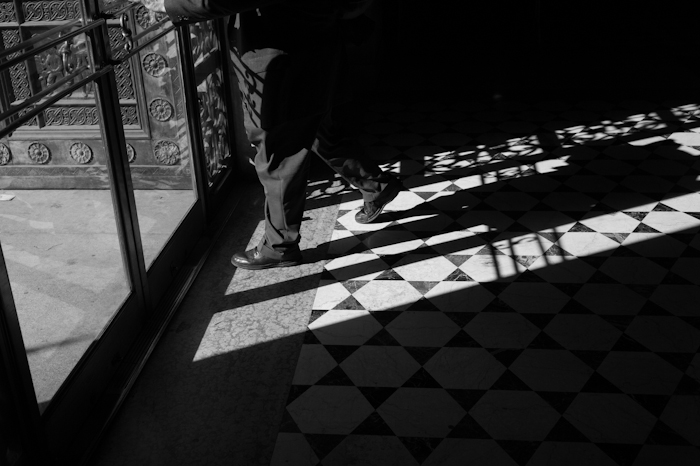
M9 Converted ISO 400, F6.7, 1/750 Sec, 50mm Summilux

The last four times I went out shooting, I came back with nothing worth looking at. O and my fellow street photographers had better luck than me. I was rather depressed, wondering when was I going to get out of this horrible slump? Then O told me about getting a Monochrome loaner. You can imagine how ecstatic I was. This was the camera that could take me out of the slump.

ISO 400, F16, 1/250 sec, 35mm Summilux

Once we had the camera in our hands, all we could think of was making the shot. But the pressure was huge to get something worth the privilege. We had limited time – two half days (we still had our day jobs to contend with and the availability of the camera was spur of the moment). So don’t expect major testing in this post although we did do a few.

ISO 400, F16, 1/125 sec, 35mm Summilux

O and I both shot with aperture priority ranging from F8 to F16 for exteriors and F1.4 to 5.6 for interiors. Unfortunately, when I loaded the images into Lightroom 4, the exposure information only registered the shutter speed but not the aperture (darn!). I hope this will be fixed with the updated firmware when the production models come out. I noted the F-stop when ever we were able to recall. The ISO’s vary and is noted with each photo. And generally, we zone focused every time.

ISO 160, F 8, 1/60 sec, 18 mm Super Elmar M

THE BASIC PHYSICAL

Let’s start with the physical characteristics: It’s effectively the M9-P. But the finish is a little different. The vulcanite on the M9 is replaced with a finer textured leather that’s nice to the touch. The metal is matte. There’s no logo or dot except for the tiny “Leica Camera Made in Germany” engraving on the back.
 The weight with battery is 600g (21 oz).
 The same as the  M9-P. I will talk about LCD screen, Menu, Frame Buffer, etc. as separate items below.

ISO 5000, F 5.6, 1/250 sec, 21mm Summilux

ISO BUMP

One of the newest and much awaited attributes of the Monochrome is the increase of the ISO range from M9’s highest of 2500 to Monochrom’s highest of 10,000. Leica didn’t change the 18 Megapixel M9 sensor made by Truesense (ex-Kodak), but it did change the parameters on what the sensor senses. Since color is no longer a concern, there is no need for the color filters that was added in front of the M9 sensor to help it recognize and record the color in light. I understand that other things like color value interpolators and artifacts no longer are of concern to black and white images. It’s really like taking away all the various layers from the sensor, allowing it to be its original naked self. So it shines when it is able to deliver full and high resolution without compromising for color.

ISO 10,000, F5.6, 1/2000 sec, 18mm Super Elmar M

It was a pleasure to take this camera around at night or in low light situations and be confident that we could shoot some photographs without bringing a flash or having to switch to our Ricoh GXR or Fuji X100. We had so much fun with the Monochrom, including having a few drinks so we could admire the design stripped of the decorations that the M9 or M9-P has. 🙂

ISO 10,000, F 5.6, 1/125 sec, 50mm Summilux

THE BEAUTY OF GRAIN

The most unique thing about this camera is the grain. The grain is just simply exquisite. The grain is not the digital hard edged type you get with the M9. It’s a soft film-like grain. I noticed noise starts to creep in after around 7-8000 ISO. Some reviews mention the optimal ISO is 5000. You can see below, at ISO 10,000, the grain does get a little muddy but I think still acceptable. I think the grain rendition alone is a reason for the Monochrome camera to exist.
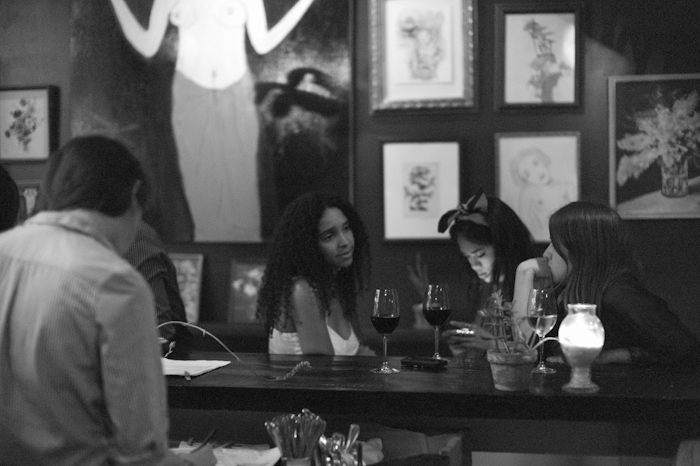
ISO 10,000, 1/125 sec, 50mm Summilux

TONES

The other most unique thing is the tonal value of the images. The blacks and grays are complex in range compared to the more contrasty M9. With the help of the new raw image data histogram, you can fine tune your exposure. The tones remind me of the way film responds.

ISO 5000, 1/180 sec, 50mm Summilux

FRAME BUFFER

At the beginning, Ebby warned us that the firmware was not ready so the preproduction model would be a little slow. He was right. The frame buffer still filled fast, slowing the computer down. After shooting continuous for 3 frames, the red light at the bottom of the LCD screen flashed for several seconds.
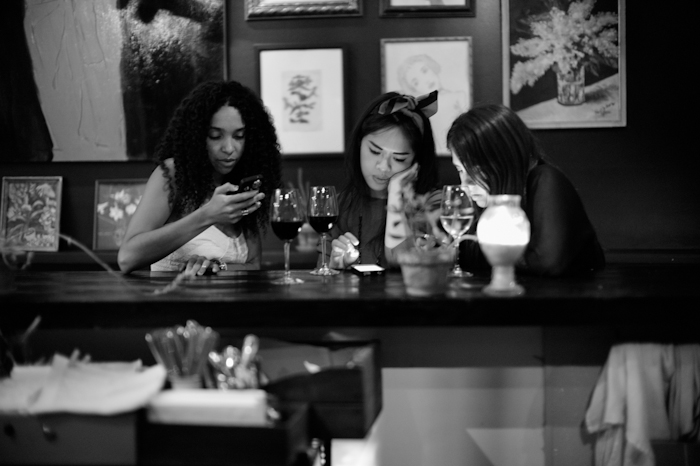
ISO 3200, 1/45 sec, 50mm Summilux 

While I could shoot a few additional frames, after about 6 to 8 shots the camera would not shoot anymore and I had to wait before I could resume. I am assuming Leica will have this part resolved by the time they deliver the production model.
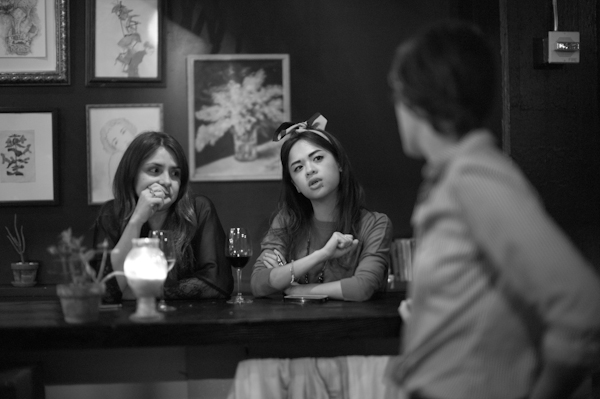
ISO 3200, 1/60 sec, 50mm Summilux
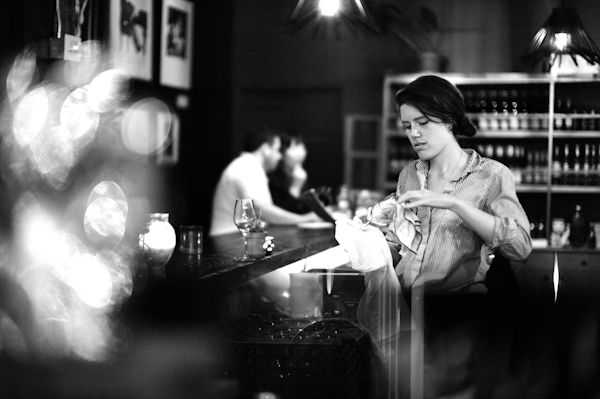
ISO 3200, F 1.4, 1/125 sec, 50mm Summilux

EXPOSURE

If you like to shoot with perfect exposure on the subject and allow the brights to blow out and over expose, then you’ll have to adjust the way you shoot. In the photo above, I center metered on Caitlin, the bartender and thought the shiny object on the left would not blow out. And the photo below, I center metered on the bread and not the light in this photo and both were mistakes.

ISO 3200, F 1.4, 1/180sec, 50mm Summilux

Had I anticipated this problem, I would have brought along my M9 or any color camera, film or digital. But, one always learn from hindsight. 🙂

This camera is best used with exact or under exposed shots. Over exposed shots do not have enough information for recovery in Lightroom. Believe me, I pushed every lever in Lightroom hoping to dig some detail out of the blown out areas and never found any, unlike images shot with the M9.

ISO 10,000, F 8, 1/1000, 18mm Super Elmar M

LCD SCREEN

The 2.5″ TFT LCD with sapphire-crystal Display screen is still the same ridiculously cheap one as the M9-P. I always struggle with focus in low lighting as you can see here despite the ‘bright-line frame viewfinder. I had hoped that since there is more data information from the Monochrom sensor, the screen would also show more detail for when I proof my focus. Unfortunately, that is not the case.

Monochrom ISO 400, 1/45 sec, 35mm Summilux

M9 Converted ISO 400, F 2.4, 1/60 sec, 50mm Summilux (see how the sensor is struggling with low light at the same ISO)

THE MENU
The Menu is basically the same as the M9 and M9-P except for:
1) The added the high ISO range.
2) The elimination of white balance used only with color.
3) A new histogram display to show the raw data combined with a clipping display. You can fine tune and optimize your exposures.  I really didn’t have time to play with this feature.

ISO 400, 1/60 sec, 35mm Summilux

RETHINK HOW YOU ‘SEE’ 

What I realize about this camera is that you have to think differently. You have to think black and white. I was frustrated several times because I saw a scene in color and when I shot it, the image did not have the meaning or punch that color would have given me. And I didn’t always have O beside me to shoot the color version. And nor did he have me all the time to shoot the color version when he was shooting the Monochrom.

Monochrom ISO 2500, 1/45 sec, 35mm Summilux (I didn’t meter this properly so you can see, the horizon is blown out and details of the distant mountain seen in the color is lost)

Since we see in color, you have to train yourself to see in black and white.  And when I use my M9, I never shoot in monochrome or view the jpeg in monochrome. I always view in color first.
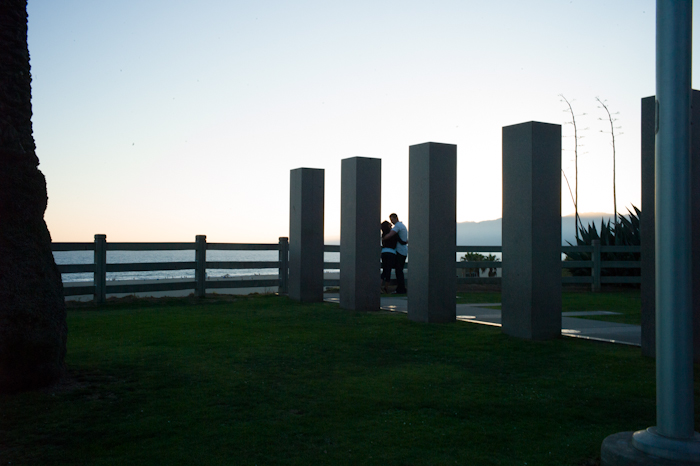
M9 ISO 1250, F13 , 1/125 sec 50mm Summilux

The other thing is you have to know the camera inside and out. You can’t be cavalier about your exposure like you would with normal color digital cameras, M9 included. The camera demands you to be more precise about what you capture in-camera as that is how it appears to be designed. Treat it like a film camera where post options are limited compared to the typical color digital camera. But you have the luxury of not having to wait for the development time of film.

ISO 400, 1/180 sec, 35mm Summilux

Professionals and amateur who normally shoot in black and white will find it easy to use. However for us, the two days O and I had the camera was not enough to wrap our heads around it. So please excuse the quality of the photography.

ISO 400, 1/60 sec, 35mm Summilux (This image is completely unprocessed-raw except that it’s a jpeg-raw)

THE PRICE TAG

At a cool US$7,970 +/- for just the body, not including taxes, the price hits you where it hurts. That’s US$1,000 more than the M9 or the same as the M9-P and you don’t have the flexibility of shooting both color and black & white. If you want the option, you’ll have to bring another camera, defeating the concept of traveling light. I wish it was at least the same cost as the M9 and not the M9-P.

ISO 400, 1/45 sec, 35mm Summilux

CONCLUSION

So what do I think about this camera? It’s funny how things take left turns in life. When Leica announced the Monochrom back in May, I was very skeptical. I thought: who would want to shoot with a dedicated camera when you have the ability to shoot color and then convert it? I also thought: who would spend so much money on a dedicated camera?
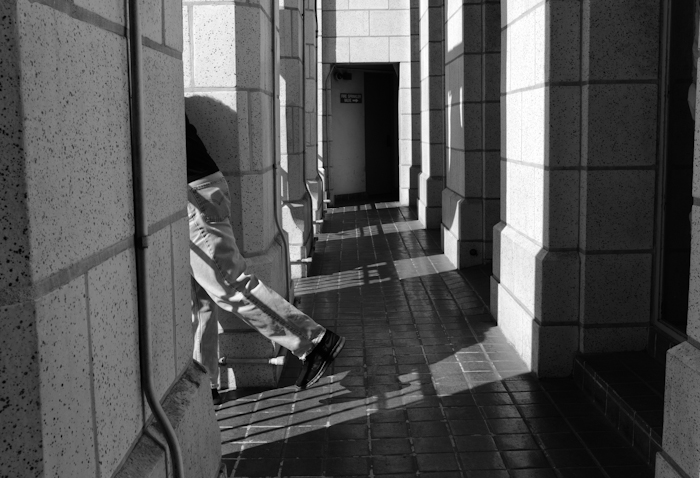
Monochrom ISO 400, F11, 1/125 sec, 35mm Summilux

The more I read about it, the more interested I became in this camera. Now that I have played with it, I can honestly say, I want to spend more quality time with it because I love it. I agree with the concept that it is the photographer’s eye and not the camera that makes the images. But we all pore over countless photobooks for inspiration, right? And now, the images that the great masters shot on black and white  film no longer seem so unattainable. I don’t mean to be presumptuous, but the desire to try to shoot amazing photos using the masters as a standard to aim for, is exponentially intensified when I use the Monochrom.
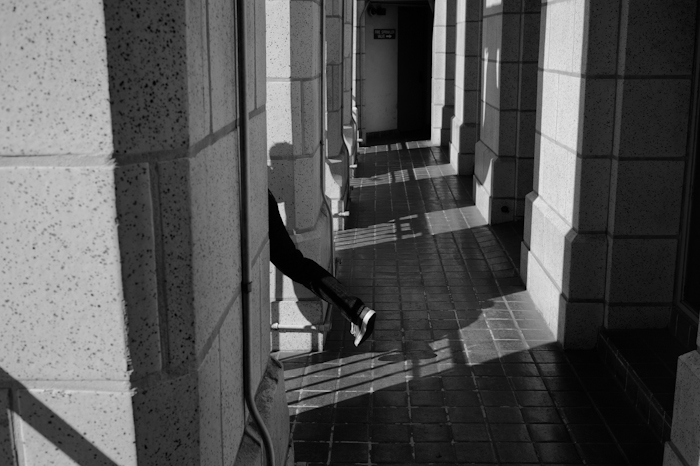
M9 Converted ISO 400, F8, 1/750 sec, 50mm Summilux

O is completely sold on this camera. He says he is already imagining the cool shots he can make with it. While we shoot with our M9 or Ricoh or whatever, O and I talk about shots that we could make with the Monochrom. Isn’t that the beginning of aiming to shoot better photography?
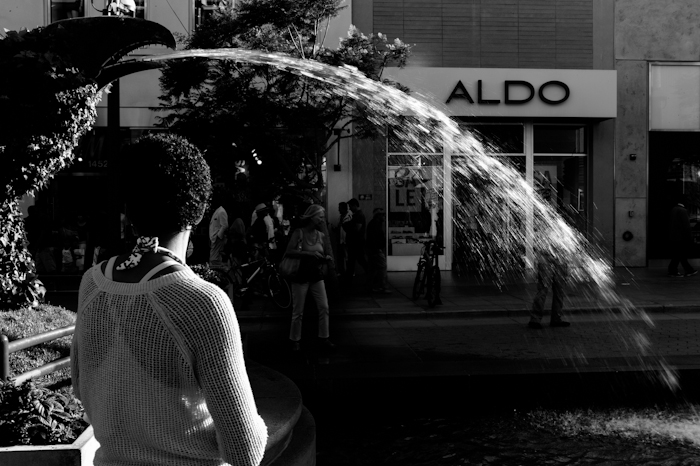
ISO 400, F16, 1/60 sec, 35mm Summilux

As the Monochrom is pricey, we have already sold various things,  just to make room for this little baby. And we can’t wait to get it and go out shooting with it. 🙂

I like to think that the Monochrom is much like the Levitated Mass by artist Michael Heizer  you see below. It’s something bold and ‘out-of-the-box’ to look at in wonderment. In the case of the Monochrom, you’re in luck. You can also use it with wonderment. 🙂

ISO 160, 1/125 sec 18mm Super Elmar M

I’ll be posting part two with a variety of images- architecture, landscape, and of course, street within the next two weeks. So keep a look out for it!!

UPDATE: AUGUST 17, 2012, I posted Part 2 here.

#4 CRAIG SEMETKO, Los Angeles Street Photographer

Leica Liker is honored to have Craig Semetko, a published (LL’s first) Los Angeles Street Photographer, as our #4 guest.

Craig is a super busy man these days. It was hard to pin him down because he is in the middle of his new project, ‘E PLURIBUS UNUM’, which entails driving all around the United States compulsively looking for the ‘decisive moment’. But when he had to come back to Los Angeles to do a comedy gig, I was able to squeeze out a few hours with him at Mel’s Diner on Sunset Boulevard. Craig is a real trooper. He was a little under the weather but didn’t cancel me. “The show must go on!”

After a few gulps from his cup of hot tea and honey, he was raring to go. All our talk about photography, people, life, cameras, and politics made him quite animated. I was thrilled because you couldn’t stop him. ☺

When I first embarked into street photography, I scoured the internet and bookstores for information and images. I came across the stable of master street photographers  you’ve all heard of, as well as Craig’s work. I also had the good luck to see his images printed and meet him at a solo exhibition at the Phil Stern Gallery here in Los Angeles.

What caught my eye in Craig’s work was his sense of humor in so many of his street photos. They were classically composed, each with a story to tell and harked back to the photos of Elliott Erwitt and Henri Cartier-Bresson. Then I learned that they are his heroes. Funny how that is.

Craig talks about depth in his photos: Depth coming from composition, content and emotion. With today’s digital photography and social networking, countless photos are taken and shown without consideration of these elements. But this self taught photographer strives very hard to achieve all three points. Together, these points always lure me in: like fish to bait. I want to know more. I always laugh or cry with the subjects in his images. They have sentiment but aren’t sentimental for sentimentality’s sake. And they often leave an indelible impression. That’s why I can remember so many of his photos, while others I forget immediately after I look at them. In my eyes, that’s a sign of a master in the making.

You can see many of Craig’s classic images in his first book “UNPOSED,” published by teNeues with a foreword by legendary photographer Elliott Erwitt. It was released worldwide in late 2010.

Here’s my interview with CRAIG SEMETKO:

Nick Name: None that I’m aware of. Maybe people call me things behind my back.
Currently living in: Los Angeles. But I have been traveling throughout the United States for the past year and will continue through the end of this year.
Motto: To quote Hunter S. Thompson: “ When the going gets weird, the weird turn pro.”
Profession/Job: Professional photographer and comedian.

Street Photographer since: Since 2000, when I went to China on a business trip and thought I should bring a camera. Prior to that I didn’t own a camera.
Websites: http://semetko.com and http://semetko.com/blog/
Organizations or Group: I don’t belong to any group that would have me as a member.

Favorite Street Camera & Lens: Leica M9 and Summilux 35mm f/1.4 (used most often) and Summilux 50mm f/1.4 lenses
Back-up Street Camera & Lens:
Leica MP. Same Summilux lenses: 35mm f/1.4 and 50mm f/1.4
Favorite photography gadget:
I love the “Thumbs up”. It kind of replaces the shutter cock on a film camera.
Favorite street food:
Any Thai street food.

Do you listen to music while shooting? Only in my head – if I wore earphones I’d get run over. Actually, I did get run over once (I’ll tell you about that later.) The music I listen to is in my head and frequently applicable to where I’m shooting. It’s usually some corny song. For instance, when I was shooting in Savannah, Georgia, I was whistling Dixie in my head.
Favorite music when shooting and/or editing Photos: When I edit I listen to all kinds of stuff-Oscar Peterson, James Brown, Rolling Stones, Ramsey Lewis…lots of jazz, funk and rock and roll.
Favorite photo software: I don’t like a lot of tech because it drives me crazy. But I do like Nik Software’s Silver Efex Pro 2 for black and white photos. As for color, you don’t have to do much to the image when using the Leica. Its sensor has vivid colors and high contrast. So I don’t need to futz too much. I just play with the curves a little in Aperture and Lightroom.

3 Favorite Master Photographers: Henri Cartier-Bresson, Elliott Erwitt and Robert Frank
3 Favorite Contemporary Photographers: Steve McCurry, Peter Turnley and Aaron Huey
Which 3 photographers’ prints do you own?
1) Herman Leonard’s photo of Dexter Gordon
2) John Dominis’ (Life photographer) photo of actor Jackie Gleason and singer Frank Sinatra at dinner.
3) Vivian Maier’s overhead shot of a soldier and girlfriend holding hands.

Color or Black and White? Both.
For the first 10 years I shot primarily black and white because my favorite photographers shot in black and white. Now I shoot mostly color. And I’m getting good feedback on it. I’m evolving.
Black and white is generally more abstract because we see in color. So it’s a challenge when working with color because it adds so many elements to the picture. If it doesn’t jive then it can look pretty bad.
Black and white is a great way to learn photography. It makes you concentrate on the essentials: form, light, story, information and emotion. Adding color can be distracting if you’re not careful. Depends on your interest and style. I’m just working my way through that right now.

Have you looked at Constantin Manos’ work? He started in black and white and moved to color.
Yes, of course. Constantin Manos’ earlier black and white photos were definitely more humanistic. The people were expressive in the pictures. His color shots are more abstract, but they do maintain a humanistic aspect.
When I shoot black and white, I also usually take the humanistic approach. And I’m applying this same approach to my color work. You know, to be conscious of the color scheme in the photo and how it relates to the people and the sensibility of the image. I really don’t want clutter in my photos, which appears rather easily with color if you’re not careful. In general, I have not made an exclusive change from one to the other. Some pictures look better in black and white and others in color. It just depends. By default, I am shooting in color for my ‘E Pluribus Unum’ (Out of Many, One) project. So it is making me think more in color.

Shoot Film or Digital? I started with film but now I shoot almost exclusively digital. When Leica came out with the M8 it was thicker and it felt too big. I didn’t like the feel. And I missed the click of the shutter cock. So I shot film for a long time while people were shooting digital. In 2008 I was commissioned to do some photography work in Los Angeles. I bought the M8.2 and the more I used it the more I liked it. Since then I never looked back. Very rarely do I use film now. My current project, ‘E Pluribus Unum’ is shot entirely with the M9. As I’m taking thousands of pictures, the time and cost of film and processing would be prohibitive. Now I’ve grown accustomed to the M9 and the ability to change ISO for varying light situations. I shoot primarily 400 ISO because I know the exposure from years of using Tri-X. And it’s great to know if I have the picture by checking it instantly.

If Film, what type of negative? I shot just about everything with Tri-X with the occasional Kodak 3200.
Is there a special time of the day you like to shoot or is any time good? For color, I like the golden hour in the late afternoon. With black and white I prefer overcast days as you can shoot anytime and your exposure doesn’t change.

Why did you choose Street Photography and not another form of photography or stamp collecting?
When I first discovered Henri Cartier-Bresson I saw a quote of his that said, “Photography is nothing-it’s life that interests me.” That rung true for me. Taking pictures in the street was just another form of people watching and telling stories.

I think street photography was always a part of me. When I was young, I took drawing and art classes and learned basic composition. Of course I learned a lot more from studying great photographic work.

I’d been a comedy ‘observation’ writer and performer for 20 years before taking any pictures. Comedy is about observing people, characters and life. So is street photography. It was natural that I would pick up a camera and look for people, characters and stories to tell. Comedy is not entirely different from street photography, at least as I see it.

When I went to China on a business trip, I bought a camera and took lots of photos. After seeing some of them printed, I realized I could use a camera as another means to tell stories. And that’s how I started. I looked for drama and characters on the streets. But then I began to study HCB’s photographs, and I realized how complicated his images were compared to mine. He looked for the form first and knew the drama and emotion would follow. This realization made me start concentrating more on composition. I also discovered Elliott Erwitt early. He has a great sense of humor, which strongly appeals to me.

What motivates you to photograph the streets? I want to capture the truth or authenticity of a situation.

W.Eugene Smith, the great photojournalist said, “I’m not interested in the truth of the lens, I am looking for the essence of truth.” For example, take a look at his famous 1958 shot A Madwoman in a Haitian Clinic. In his contact sheets, you see the woman in a room with objects and details behind her. But in his final presentation print, he blacked out the background by burning in the room. He then applied bleach in the whites of her eyes to make them pop. This left a disembodied face that looked freakish. To him it conveyed the truth of the situation: a woman trapped in her own mind. I’m not passing judgment. I’m just saying, it’s about capturing people, life situations and showing that truth.

I gravitate towards the absurd and street photography allows me to find it. I like people to look at my photographs and say, ‘what the hell is that?’ I try to provide the elements of a story and let the viewer fill in the details.

Is Street Photography an escape or an obsession? More obsession than escape. In the beginning it was a burning love, like meeting someone and going through the first phase of lust. Then it settles into a deeper love. I have a different feeling towards it now than when it began. Before it was – ‘I’m going out to shoot.’ Now, it’s my life. It must be a passion or mental illness that is making me criss-cross America for the next year.

Are you a loner or can you shoot with friends of a group? I am a loner when shooting. When I’m with someone I tend to want to socialize or entertain. However, I have grown to see the immense value of having a person with me as an accomplice. I was in Atlanta in a mall with my mother and nieces when I saw an old lady next to Santa who I wanted to photograph. I told my mother I needed her help to get the shot. She didn’t know what to do. I told her to just stand next to me–it made me look less suspicious.
Favorite street photography city: New York! There’s always something weird going on.

What inspires your photography? I’m always reading books, going to museums, listening to music. Rhythm and music inspire me as a comedy writer and as a photographer. Also the work of the masters. I keep copies of books by Erwitt, HCB, Frank and Vivian Meir in my vehicle while I drive around the country.
What do you look for in a good photograph? From others and from your own work?
I look for a sense of geometry, information, and emotion. It has to tell a story or present the elements of a story in a well-composed frame and create some emotion in the viewer.

I expect that from my own photos as well but I am also trying to go deeper. I definitely add humor to the equation. To see something as funny, you have to understand the seriousness from which it emanates. It has to be based on some truth. And I want to show more than just humor. I’ve had people contact me after buying my book UNPOSED to tell me that each time they look at my photographs they see more in them. They might get an immediate chuckle but then they see the seriousness as well – the deeper story. I love to hear that.

I read that you believe photographing does not require too much thinking because it “constipates” things. How do you go about shooting? Thinking can be a problem. When I’m in the moment, I’m not thinking at all. I’m locked in non- thought. The more you think about a shot, the easier it is to lose it. If you’re thinking long, you’re thinking wrong. Sometimes you just have to take the shot.
Best 3 tips for shooting the streets: Be fast. Get closer. Work on seeing. Carry a camera, and be aware of your surroundings. If you don’t have a camera with you, pretend you are a camera and blink your eye at the decisive moment. That will teach you to observe. It will help you start to anticipate your subjects’ movements and learn when to press the shutter.

Best single advice on how to improve your work: Study the masters, not Flickr.
Best single advice on how to edit your work: Have someone else do it. It can be a revelation. I’ll give you an example. My most well known photograph was one I never thought of printing or showing to anyone. I had a photographer friend of mine whose opinion I respect look at my contact sheets. He saw the shot of a man pissing at a urinal with pictures of Marilyn Monroe looking at him and laughing. He insisted I print it. I did, and it is my best selling print. So you can have surprises.

Best single advice for someone who wants to get into street photography: Elliott Erwitt said, “Be an heir and do it on the side.” I believe he was only half joking. It’s a tough road to hoe, so you really have to love doing it. Shoot as much as possible. You have to dedicate yourself to it and go through a lot of shoe leather. Finally, and this is important–try to take pictures that no one else on earth but you could take. This will help you develop a personal style, which is imperative in a world where everyone with a cell phone is a photographer.

What’s the best moment in your street photography career? Every time I press the shutter and know I’ve got a good one. But there is one really overwhelming experience: A friend of mine suggested I show some of my work to a gallery owner in Durango, Colorado. I did, she liked it and told me to stay in touch. I wasn’t very good at staying in touch but six months later she called me saying that she was doing an exhibit of HCB’s work and was wondering if I would like to show some of my work alongside his. You can imagine how excited I was. I remember the day we put that show up and I stood in the corner and looked at the walls. There were 25 Cartier-Bresson prints and 25 of mine. I teared up. I got into street photography and bought a Leica because of him.

What’s the worst moment in your street photography career? I was run over by a motorcycle in Hanoi, Vietnam. It gave me a pronounced limp for a while.
What projects are you working on and is there a theme? E Pluribus Unum – my project about the United States in 2011/2012. I started off wanting to show the polarities in present day America–economic disparities, political intransigence, etc., with the intent of spending periods of time with families at home or at work. Very soon into the project I realized I was drifting from my personal style. People whom I respect reminded me how important it was to not change my style. So now I am very conscious of not altering it. As a result I changed the way I approached this project. I now shoot in the same way I always do–I look for something that interests me and I take a picture. I will continue the project through the end of this year, and then the real work begins–editing!

Where do you want to be in 5 years with regard to street photography?
I hope to continue doing candid spontaneous pictures of people’s lives. And finishing up my third book. ☺ Just going with the flow, seeing where life takes me. And I hope that I am a better photographer than I am now.
Congratulations on the last exhibit you had at the Phil Stern Gallery last October. Are there exhibitions planned in the future? Yes, I’m part of a 6 photographer exhibit entitled ‘OFF THE BEATEN PATH’ at the Robert Anderson Gallery in New York City. I’ll be showing three established photos and three new pieces from my current project. The opening night reception is June 7th and it runs through August 4th. One of the photographers is Geoff Winningham. I’m looking forward to that.

Leica Liker thanks Craig for sharing his experience and the inspirational advice with us. We will check in on his E PLURIBUS UNUM in the near future.

Craig teaches at Leica Akademie Weekend. His upcoming workshop will be on July 20th to 22nd in Venice Beach, Los Angeles, California. Check out Leica Akademie Schedule here for more information.

You can check out Craig’s gear in Liker Bags’n Gear here.

This is Craig’s self portrait. Notice his Leica M9 🙂